Criminal Justice

RSS Feed for this category

Sens. Leahy and Paul Introduce Bill to Undo Mandatory Minimum Sentencing

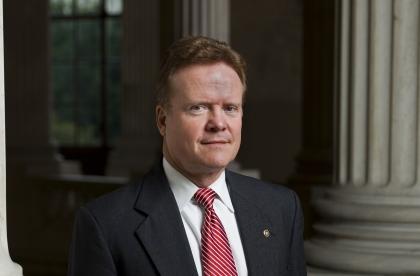
Pat Leahy & Rand Paul
Senators Patrick Leahy (D-VT) and Rand Paul (R-KY) have introduced S. 619, the bipartisan "Justice Safety Valve Act of 2013," allowing judges to set aside mandatory minimum sentences when they deem appropriate. It expands on legislation passed in 1994 that allows judges to waive five- and ten-year sentences for certain drug crimes. (We advocated for the original safety valve, during our first year as an organization.) The Leahy-Paul bill does this for all federal crimes.

Leahy, who chairs the Judiciary Committee, has a press release. So does FAMM.

Phil will be doing a feature story on the bill tomorrow, but not in time for tomorrow morning's email editions, so be sure to check Drug War Chronicle this week. (If you don't get the Chronicle by email, you can sign up here.)

This Week's Corrupt Cops Stories

A Customs agent, a Texas deputy, and a small-town California cop all go down this week. Let's get to it:

In Yuma, Arizona, a US Customs and Border Patrol officer was arrested last Thursday on money laundering charges. Officer Lauro Tobias, 59, went down in a sting operation last August in which he transported a bag containing a large amount of cash he believed to be drug profits from Las Vegas to Phoenix. He was snared by the Southern Arizona Corruption Task Force, made up of numerous federal agencies and prosecutors.

In Fresno, California, a former Hanford police officer was sentenced last Wednesday to six months in jail for selling drugs while in uniform. Ernesto Servin went down after prosecutors received an anonymous tip he was selling drugs on the job, and undercover investigators found drugs in his patrol car. During his trial, prosecutors said he was stealing drugs from dealers and selling them to addicted women with whom he hoped to have relationships.

In Houston, Texas, a former Harris County's sheriff's deputy was sentenced Monday to 46 months in federal prison for conspiring to steal drug loads from dealers and split the proceeds with others. Richard Nutt, 45, had pleaded guilty last month. He went down in a 2010 sting after the Houston Police heard that members of law enforcement were robbing drug shipments in the area. Nutt agreed to conduct a bogus traffic stop of what he thought was a drug dealer's car and pretend to arrest him, while his co-defendants took the vehicle with the drugs. He was arrested after the rip-off went down and found with the package of fake cocaine stolen in the rip-off.

NYPD Marijuana Arrests Scandal Blows Up Again

March 2012 protest of NYC stop and frisk violations
A front page story on The Huffington Post reported on another New York marijuana arrests report by our friend Prof. Harry Levine, this one with Loren Siegel (formerly of ACLU) and DPA's Gabriel Sayegh. It's the best one yet, or at a minimum the title is the best one yet:

"NYPD Spent 1 Million Hours Making 440,000 Marijuana Possession Arrests Over Last Decade"
 

Many of those hours involved overtime pay too. It really sums up the stupidity of it all, in a pretty special way. (The injustices were addressed last week.)

Also, there's a lawsuit, and a judge told NYPD to stop "stop and frisk" arrests in the meanwhile. (But have they?) And Gov. Cuomo continues to push for full decrim to plug the "open view" loophole officers have abused to make all these arrests.

Phil is working on a story for the Chronicle, but there are some links in the meanwhile.

Location: 
New York City, NY
United States

Snitch: Action Thriller With a Drug War Message [FEATURE]

Snitch is a Hollywood action thriller with a message, and it’s a message that is so far playing well with audiences and theaters across the land. The $15 million crime and justice pic starring Dwayne "The Rock" Johnson and Susan Sarandon has already done more than $32 million in gross box office receipts, and its being held over for a fourth week in select theaters around the country.

Based on a 1999 PBS Frontline documentary of the same name, Snitch tells the story of trucking company owner John Matthews (Johnson), whose estranged son is set up by a friend in trouble with the law. The son accepts delivery of a package of Ecstasy, and is then raided and arrested by the DEA. Matthews' hired attorney explains to the stunned parents that their son is looking at a 10-year mandatory minimum sentence, and the only way out is to snitch on somebody else.

The son bravely refuses to rat out his friends and is kept behind bars, where he is brutalized, but Matthews feels it is nobler to save his son and decides to intercede on his behalf. Using his business connections, he wrangles a meeting with hard-hearted, politically-driven US Attorney Joanne Keeghan (Sarandon) and offers to set up dope dealers himself if that can get his son out of trouble.

From there, it's typical action thriller material, with dangerous, desperate dope dealers (who already have two strikes and aren't about to go down for a third), tormented ex-cons trying to go straight, duplicitious (but kind hearted) DEA agents, and bloodthirsty Mexican cartels. There is danger, suspense, shoot 'em ups, and car chases before the movie resolves with junior getting out of jail and the family disappearing into the witness protection program.

But running throughout the nearly two-hour movie are the twin themes of snitching and mandatory minimum sentencing. Snitch lays bare the workings of the drug war's informing imperative, scratching at the surface of the moral contradictions involved, and subtly brings to life the mindless cruelty of imposing lengthy mandatory minimums on nonviolent drug offenders, but it manages to do so in the middle of a mainstream cinematic entertainment vehicle.

That's just what director Ric Roman Waugh wanted, he told Drug War Chronicle in a phone interview Wednesday from Austin, where he is attending the SXSW festival. Once merely a music showcase, SXSW is now a playland for all sorts of artistic endeavors, including Hollywood action films with a message.

"The move is really a first testament to how far you go to protect your kids," said Waugh. "In the documentary, he didn't just talk the talk, he walked the walk. He got the US Attorney to sign off and reduce his kid's sentence for a bigger bust. That really happened, and we wanted to open that up."

When he was offered the chance to rewrite the script for the movie, he jumped at the offer, he said.

"They sent me the original script and the Frontline documentary, and it was that core message that really jumped out, and we turned that into a first-person point of view movie," the stuntman turned director said. "The snitching and the mandatory minimums were integral to what we wanted to talk about. The message of the movie is that you can be for or against the war on drugs, but watch what this father went through and then think about these controversial mandatory minimums. When you walk out of the theater and realize nonviolent drug offenders are doing longer sentences than rapists and people who committed manslaughter, that's something to think about."

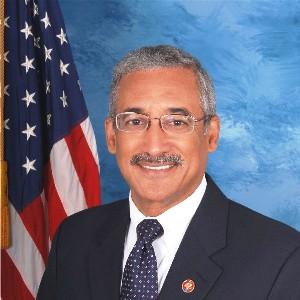
panel at DC Snitch screening, with Rep. Bobby Scott (D-VA, FAMM president Julie Stewart, Waugh, and Lawrence & Lamont Garrison
Snitch was screened last week at an event hosted by Families Against Mandatory Minimums (FAMM) in Washington, DC, but the film has been generating buzz among the broader public as well.

"The response has been tremendous," Waugh said. "There is a core audience that will go see a movie with a message, but that's a relatively small audience. But when you can put that message in the body of bigger action thriller and you're not hitting them over the head with it but just allowing them to experience the controversies, they're coming out and talking about it. They're talking about the world of informants, the liar's club, if you will, and what you would do if your life or the life of your child was on the line. It's created a lot of dialog, and that's what we intended.

Unlike documentaries, which typically play to art house audiences and die quiet, largely unlamented deaths, this Hollywood treatment of the issues has demonstrated some staying power.

"It's been playing for three weeks and will continue for quite awhile," said Waugh. "We've exceeded expectations for movies this size, lots of theaters are keeping us over for the fourth week, and we're even adding a few screens. People are able to relate to this in their own lives. What would happen if their kids were in harm's way? The movie tries to look these draconian laws and the system as a whole and get people to ask where they stand on them. We're only halfway there, and it's already a success. That's a real testament that you can do a message movie, you can do a commercial action thriller that's about something."

As noted above, even though Snitch opened on February 22, it's still being held over in theaters across the land. If you have an interest in drug war issues or if you get off on action flicks in general or flicks starring The Rock in particular, or better yet, if you have a friend or family member who's gaga for The Rock or a sucker for car chases, but has displayed no particular interest in or awareness of issues like snitching or mandatory minimums, it's time to have a movie date while Snitch is still on the big screen.

This Week's Corrupt Cops Stories

Cops growing pot, cops stealing pain pills, cops doing rip-offs, and narcs up to shady doings. Just another week on the corrupt cops beat. Let's get to it:

In Wilmington, North Carolina, the State Bureau of Investigation has agreed to look into potential criminal activity by Wilmington Police during a botched undercover drug sting. A Hanover County investigation had found that officers acted "outside of acceptable standards," but did not break any laws with their use of alcohol during the undercover drug and prostitution sting. But the investigation revealed several irregularities, including the disappearance of a video camera with critical information about the sting. Its disappearance was not reported until nine months after the fact. The murky scandal has already led to the reorganization of the department's drug squad and the transfer of its commander.

In Mobile, Alabama, a former Montgomery County police corporal was charged last Thursday with federal marijuana offenses. Lyvanh Rasavong had previously been charged in state court, but Alabama prosecutors dismissed those charges in deference to the federal charges. Rasavong is accused of conspiring with another man to sell four pounds of marijuana late last year. The indictment also alleges he sold an ounce to an undercover cop in December. He is charged with conspiracy to possess with intent to distribute marijuana. Rasavong was caught with three pounds of pot during a raid on a home in December and has also been implicated in a 100-plant grow bust in October. He is free on bail pending trial and is looking at up to five years in federal prison.

In Shinnston, Connecticut, a Shinnston police officer was arrested Tuesday for stealing pain pills. Officer Charles Roscoe Henning III is accused of repeatedly making off with hydrocodone pills in incidents stretching back over the past two years, including incidents where he took pills he claimed were needed for investigations, where he confiscated pills after warrant searches, and where he confiscated pills during a traffic stop and then took more when the driver brought in his prescription pill bottle as proof of innocence. He faces seven counts of unlawfully acquiring controlled substances by fraud, forgery, deception, or subterfuge. He's looking at one to four years on each count. Henning has now been fired.

In Jackson, Mississippi, three former Jackson area police officers pleaded guilty last Thursday to stealing federal property -- $23,000 in cash that they thought belonged to drug dealers, but was actually federal sting money. Kent Daniels of Byram, a former Jackson police detective; Zack Robinson, former deputy with the Hinds County Sheriff Department; and Watson Lee Jackson Jr. of Ridgeland, a former Madison County deputy, all copped to plotting to rip off a supposed drug dealer at a Jackson hotel room in September 2011. The former officers pleaded guilty to one count of the two-count indictment. A plea agreement says the penalty could be up to 10 years in prison with three years of supervised release and a fine of up to $250,000.

Medical Marijuana Update

There is action in various state houses, Michiganders continue to tussle over their medical marijuana law, and there's an investigation going on in Maine. Let's get to it:

California

Last Thursday, the California Coastal Commission approved Imperial Beach zoning law changes that banned dispensaries from operating in the city. The city had approved the ban in July 2011, but action was delayed while opponents of the ban sought unsuccessfully to overturn it with a municipal initiative last November. The change in local zoning will not impact the ability for up to three people to form a collective to cultivate marijuana in Imperial Beach.

Maine

Last Friday, state officials said they were investigating a cultivation center that supplies the state's largest dispensary operator. The grow operation supplies Wellness Connection of Maine's four dispensaries, which all closed last week. A Wellness Connection spokesperson said the state was conducting "a comprehensive regulatory inspection" and that there was no connection between the investigation and the dispensary closings. State officials had no further comment.

Maryland

Last Friday, the governor's office suggested he would support a pending medical marijuana bill. Joshua Sharfstein, Gov. Martin O’Malley’s secretary of Health and Mental Hygiene, testified before lawmakers on Friday that a bill sponsored by Del. Dan K. Morhaim (D), a Baltimore County doctor, contained most of the provisions the governor could support. The bill would allow academic medical centers in the state to operate "compassionate use programs" beginning in 2016.

Massachusetts

Last Friday, the Massachusetts Medical Society called for research on marijuana's medical uses. The move signals an evolution in the thinking of the doctors' group, which had publicly opposed passage of the state's medical marijuana initiative last year. The group called for research to ensure that marijuana is subjected to the same rigorous testing as prescription drugs.

Michigan

Last Tuesday, a circuit court judge ruled that medical marijuana users can collect unemployment benefits. Ingham County Circuit Judge William Collette overturned a decision by a state commission that found a state-approved medical marijuana user, who was fired from her job after failing a drug test, was not eligible for the benefits. Collette ruled that the worker had already informed her employer of her medical marijuana use and the drug test "merely demonstrated what she had informed her employer of prior to the test -- that she uses medical marijuana."

Last Wednesday, police in Grand Rapids raided three dispensaries. Dispensaries were ruled illegal by the state Supreme Court last month, and the state attorney general has given local prosecutors the go-ahead to start shutting them down. At least one dispensary has already reopened, with the proprietor arguing that it is not violating the law because it requires caregivers to be present with patients during transactions. No charges have been filed yet.

Last Friday, a circuit court judge ruled that dispensaries are bound by local zoning laws. Washtenaw County Circuit Court Judge Archie Brown made the ruling in refusing dismiss a complaint against two Ypsilanti Township residents who are accused of growing more marijuana than the town's zoning ordinance allows. Under the Michigan Medical Marijuana Act, caregivers can grow up to 72 plants for patients, but township code only allowed the 12 plants approved for an individual patient. The case was the first court challenge to zoning laws restricting medical marijuana in the state.

Minnesota

On Wednesday, a Public Policy Polling survey found that 65% of state voters support medical marijuana. The results of the statewide survey come as state lawmakers prepare a bipartisan bill that would make it legal for Minnesota residents with debilitating medical conditions, such as cancer, multiple sclerosis, and HIV/AIDS, to access and use medical marijuana if advised to do so by their physicians. Its introduction is expected within the next two weeks, at which time details of the proposal will be made available. The poll found a strong majority (54%) of voters in the state would disapprove of their county sheriff or county attorney working to defeat such a bill, while only 24% would approve.Two-thirds (66%) think Gov. Mark Dayton should sign it if it is approved by the legislature.

Missouri

Last Friday, a medical marijuana bill was reintroduced in the state legislature. The bill, House Bill 688, would allow patients with debilitating conditions, such as HIV/AIDS, cancer, and multiple sclerosis, to use and possess marijuana for medical purposes if their doctors recommend it. The bill would put the question to voters on the November 2014 general election ballot.

New Hampshire

Last Thursday, a medical marijuana bill advanced in the House. The Health Human Services and Elderly Affairs Committee voted 14-1 to recommend that the full House pass the bill after amending it to block out of state patients from buying marijuana at the five dispensaries the bill envisions. Out of state patients could bring up to two ounces of their medicine with them. The amended bill also lowers the number of plants allowed from four adults to three and reduces the area of a legal grow site from 100 square feet to 50.

Undercover Narc Kills Armed Michigan Teen

An undercover Michigan drug task force officer shot and killed a 17-year-old who pulled a weapon and tried to rob him Tuesday afternoon in Southfield, police said. Austin Ryan Thomas becomes the 7th person to die in US domestic drug law enforcement operations so far this year.

According to the Detroit Free Press, citing police sources, an as yet unidentified Madison Heights police officer working with the Oakland County Sheriff's Office Narcotics Enforcement Team (NET) was working undercover during an investigation at an apartment complex in Southfield when the teenager pulled a weapon and tried to rob him.

"During the investigation a suspect pulled a weapon on one of the undercover NET officers and placed the weapon to the officer's head in an attempt to rob him," said Oakland County Undersheriff Mike McCabe late Tuesday in a prepared statement.  "The officer pulled his gun and was able to fire shots that struck the suspect."

Oakland County Sheriff Mike Bouchard said Wednesday that undercover agents had twice previously bought cocaine from Thomas. He added that Thomas had entered the undercover agent's unmarked vehicle and was seated in it when shot. The vehicle did not carry surveillance cameras because it was an unmarked vehicle, he said.

 Thomas was transported to a local hospital and pronounced dead there. No officers or bystanders were hurt.

The NET task force is comprised of deputies and police officers from 13 Oakland County jurisdictions, along with DEA agents. The police shooter has been placed on paid administrative leave pending a review of the killing.

Southfield, MI
United States

ACLU to Examine SWAT, Police Militarization

The American Civil Liberties Union announced this week that it was seeking data from police departments across the country in an effort to determine the extent to which law enforcement agencies are using federally-subsidized military-style weapons and tactics. The group said it had filed 255 public records requests with law enforcement agencies in 23 states, as well as with the National Guard.

Paramilitarized SWAT teams are one example of what the ACLU will be looking at. Originally conceptualized as specialized units to be used in limited circumstances, such as hostage-rescues or armed standoffs, SWAT teams have been subject to mission creep and are now used routinely by some departments for, among other things, executing drug search warrants.

"Equipping state and local law enforcement with military weapons and vehicles, military tactical training, and actual military assistance to conduct traditional law enforcement erodes civil liberties and encourages increasingly aggressive policing, particularly in poor neighborhoods and communities of color," said Kara Dansky, senior counsel for the ACLU's Center for Justice. "We've seen examples of this in several localities, but we don't know the dimensions of the problem."

The ACLU will be seeking information on the number and purpose of SWAT deployments, the types of weapons used, injuries sustained by civilians, training materials, and funding sources for them.

The group will also be looking more generally at the use of advanced weapons and cutting edge technologies, including unmanned drones, GPS tracking devices, detainee restraint devices ("shock-cuffs"), and military weaponry, equipment, and vehicles obtained directly through the Departments of Defense and Homeland Security or funded by them.

They will also seek information from state National Guards regarding incidents of direct contact with civilians, as well as examining cooperative agreements between local law enforcement agencies and the Guard's counter-drug program.

"The American people deserve to know how much our local police are using military weapons and tactics for everyday policing," said Allie Bohm, ACLU advocacy and policy strategist. "The militarization of local police is a threat to Americans' right to live without fear of military-style intervention in their daily lives, and we need to make sure these resources and tactics are deployed only with rigorous oversight and strong legal protections."

The affiliates which filed public records requests are: Arizona, Connecticut, Delaware, Florida, Georgia, Hawaii, Maine, Massachusetts, Michigan, Mississippi, Missouri, Montana, Nebraska, New Jersey, North Carolina, Pennsylvania, Rhode Island, South Carolina, Texas, Utah, Washington, West Virginia and Wisconsin.

Once the information has been collected and analyzed, if needed, ACLU plans to use the results to recommend changes in law and policy governing the use of military tactics and technology in local law enforcement.

This Week's Corrupt Cops Stories

The Tulsa police corruption scandal is the gift that keeps on giving, Jackson, MS, cops head to prison, and more cops want pills too badly for their own good. Let's get to it:

In Boston, a former Watertown police officer was arrested Tuesday on charges he stole a drivers' license and used it to fraudulently obtain oxycodone and other controlled substances. Joseph Deignan, 57, is charged with unlawful possession of a controlled substance by fraud and fraud in connection with identification documents. Deignan was working as the Watertown Police traffic supervisor when he allegedly stole the drivers' license. He's looking at up to 15 years in federal prison on the identity theft count.

In Stillwater, Minnesota, a now former Washington County deputy was arrested last Wednesday for allegedly stealing drugs deposited in a drug "take-back bin." Ricky Gruber, 43, is charged with drug possession, theft, and misconduct of a public officer. He went down after a sheriff's sergeant noticed the bin had been tampered with, and subsequent video surveillance caught him opening the bin and removing drugs. Gruber admitted he took the drugs for "personal use" and said he had been researching a medical condition present during "sexual intimacy." He said he took the drugs to help with his medical condition.

In Tulsa, Oklahoma, a former Tulsa police officer was held in contempt last Wednesday for giving false testimony related to a Tulsa police corruption case. Jeff Henderson got an additional three months added to his 42-month sentence after being convicted in 2011 on six counts of perjury and two counts of civil rights violations. He had been brought back to Tulsa in June to testify in the case of one of the people railroaded into prison by corrupt Tulsa police, but was found to have lied about who his informant was in that case. Two other Tulsa police officers and a federal agent have been convicted in the Tulsa corruption case, 46 wrongfully convicted people have been released from prison or had their cases modified, and at least 14 lawsuits have been filed against the city and individual police officers.

In Jackson, Mississippi, three former Jackson police officers were sentenced last Friday for accepting bribes from FBI undercover agents posing as drug traffickers. Monyette Quintel Jefferson, 27, and Terence Dale Jenkins, 25, got 10 years each, and Anthony Ricardo Payne, 25, got nine years. All three pleaded guilty last fall. They had accepted bribes ranging from $10,000 to $20,000 to protect what they thought were cocaine shipments.

Public Benefits Drug Test Bill Advances in Kansas

The Kansas Senate Thursday approved a bill requiring welfare and unemployment benefits recipients to undergo drug tests if there is "reasonable suspicion" they are using drugs. But the definition of "reasonable suspicion" includes having worked in a field where drug testing is prevalent.

Democratic legislators successfully amended the bill so that its provisions also include lawmakers.

The Republican-backed bill, Senate Bill 149, passed on a 31-8 vote, largely along party lines.

According to the bill, reasonable suspicion may be arrived at, but is not limited to, "an applicant's or recipient's demeanor, missed appointments and arrest or other police records, previous employment or application for employment in an occupation or industry that regularly conducts drug screening, termination from previous employment due to unlawful use of a controlled substance or controlled substance analog or prior drug screening records of the applicant or recipient indicating unlawful use."

People who fail the drug test would lose benefits until they complete drug treatment and job training programs.

Republicans argued that the bill would help people with addictions kick their habit and prevent state tax dollars from being spent on drugs. But according to a legislative fiscal analysis, the bill would create "a net fiscal effect of increased expenditures of $1,095,468 in FY 2014" and create no net benefit to state coffers in years after that.

The bill now goes before the state House.

Wichita, KS
United States

Drug War Issues

Criminal JusticeAsset Forfeiture, Collateral Sanctions (College Aid, Drug Taxes, Housing, Welfare), Court Rulings, Drug Courts, Due Process, Felony Disenfranchisement, Incarceration, Policing (2011 Drug War Killings, 2012 Drug War Killings, 2013 Drug War Killings, Arrests, Eradication, Informants, Interdiction, Lowest Priority Policies, Police Corruption, Police Raids, Profiling, Search and Seizure, SWAT/Paramilitarization, Task Forces, Undercover Work), Probation or Parole, Prosecution, Reentry/Rehabilitation, Sentencing (Alternatives to Incarceration, Clemency and Pardon, Crack/Powder Cocaine Disparity, Death Penalty, Decriminalization, Drug Free Zones, Mandatory Minimums, Rockefeller Drug Laws, Sentencing Guidelines)CultureArt, Celebrities, Counter-Culture, Music, Poetry/Literature, Television, TheaterDrug UseParaphernalia, ViolenceIntersecting IssuesCollateral Sanctions (College Aid, Drug Taxes, Housing, Welfare), Violence, Border, Budgets/Taxes/Economics, Business, Civil Rights, Driving, Economics, Education (College Aid), Employment, Environment, Families, Free Speech, Gun Policy, Human Rights, Immigration, Militarization, Money Laundering, Pregnancy, Privacy (Search and Seizure, Drug Testing), Race, Religion, Science, Sports, Women's IssuesMarijuana PolicyGateway Theory, Hemp, Marijuana -- Personal Use, Marijuana Industry, Medical MarijuanaMedicineMedical Marijuana, Science of Drugs, Under-treatment of PainPublic HealthAddiction, Addiction Treatment (Science of Drugs), Drug Education, Drug Prevention, Drug-Related AIDS/HIV or Hepatitis C, Harm Reduction (Methadone & Other Opiate Maintenance, Needle Exchange, Overdose Prevention, Safe Injection Sites)Source and Transit CountriesAndean Drug War, Coca, Hashish, Mexican Drug War, Opium ProductionSpecific DrugsAlcohol, Ayahuasca, Cocaine (Crack Cocaine), Ecstasy, Heroin, Ibogaine, ketamine, Khat, Marijuana (Gateway Theory, Marijuana -- Personal Use, Medical Marijuana, Hashish), Methamphetamine, Nicotine, Prescription Opiates (Fentanyl, Oxycontin), Psychedelics (LSD, Mescaline, Peyote, Salvia Divinorum), Synthetic Drugs (Mephedrone, Synthetic Cannabinoids)YouthGrade School, Post-Secondary School, Raves, Secondary School