Mandatory Minimums

RSS Feed for this category

This Year's Top 10 International Drug Policy Stories

This year saw continued turmoil, agitation, and evolution on the international drug policy front. While we don't have the space to cover all the developments -- the expansion of medical marijuana access in Israel, the rise of Portugal as a drug reform model, the slow spread of harm reduction practices across Eurasia -- here are what we see as the most significant international drug policy developments of the year.

The Mexican Tragedy

San Malverde, Mexico's patron saint of narco-traffickers
Mexico's ongoing tragedy is exhibit number one in the failure of global drug prohibition. This month, the official death toll since President Felipe Calderon deployed the military against the so-called cartels in December 2006 passed 30,000, with 10,000 killed this year alone. The multi-sided conflict pits the cartels against each other, cartel factions against each other, cartels against law enforcement and the military, and, at times, elements of the military and different levels of law enforcement against each other. The US has spent $1.2 billion of Plan Merida funds, mainly beefing up the police and the military, and appropriated another $600 million this summer, much of it to send more lawmen, prosecutors, and National Guard units to the border. None of it seems to make much difference in the supply of cocaine, heroin, marijuana, and methamphetamine coming over (under, around, and through) the border, but the horrorific violence of Mexico's drug war is eroding public confidence in the state and its ability to exercise one of its essential functions: maintaining order. The slow-motion disaster has spurred talk of legalization in Mexico -- and beyond -- but there is little chance of any real movement toward that solution anytime in the near future. In the mean time, Mexico bleeds for our sins.

The Rising Clamor for a New Paradigm and an End to Drug Prohibition

The critique of the international drug policy status quo that has been growing louder and louder for the past decade or so turned into a roar in 2010. Impelled in part by the ongoing crisis in Mexico and in part by a more generalized disdain for failed drug war policies, calls for radical reform came fast and furious, and from some unexpected corners this year.

In January, the former French Polynesian President Oscar Temaru called for Tahiti to legalize marijuana and sell it to European tourists to provide jobs for unemployed youth. Three months later, members of the ruling party of another island nation spoke out for reform. In traditionally tough on drugs Bermuda, leading Progressive Labor Party members called for decriminalization.

In February, an international conference of political figures, academics, social scientists, security experts, and activists in Mexico City called prohibition in Mexico a disaster and urged drug policies based on prevention, scientific evidence, and respect for human life. By August, as the wave of violence sweeping Mexico grew ever more threatening, President Felipe Calderon opened the door to a discussion of drug legalization, and although he quickly tried to slam it shut, former President Vicente Fox quickly jumped in to call for the legalization of the production, distribution, and sale of drugs. "Radical prohibition strategies have never worked," he said. That inspired Colombian President Juan Manuel Santos to say that he supported the call for a debate on legalization. The situation in Mexico also inspired two leading Spanish political figures, former Prime Minister Felipe Gonzales and former drug czar Araceli Manjon-Cabeza to call for an end to drug prohibition in the fall.

Midsummer saw the emergence of the Vienna Declaration, an official conference declaration of the World AIDS Conference, which called for evidence-based policy making and the decriminalization of drug use. The declaration has garnered thousands of signatures and endorsements, including the endorsements of three former Latin American presidents, Henrique Cardoso of Brazil, Ernesto Zedillo of Mexico, and Cesar Gaviria of Colombia. It has also picked up the support of public health organizations and municipalities worldwide, including the city of Vancouver.

Great Britain has also been a locus of drug war criticism this year, beginning with continuing resignations from the Advisory Council on the Misuse of Drugs. Several members of the official body had quit late last year in the wake of the firing of Professor David Nutt as ACMD after he criticized government decisions to reschedule cannabis and not to down-schedule ecstasy. In April, two more ACMD members resigned, this time in response to the government's ignoring their recommendations and banning mephedrone (see below).

The revolt continued in August, when the former head of Britain's Royal College of Physicians joined the growing chorus calling for radical reforms of the country's drug laws. Sir Ian Gilmore said the government should consider decriminalizing drug possession because prohibition neither reduced crime nor improved health. That came just three weeks after Nicholas Green, chairman of the Bar Council (the British equivalent of the ABA), called for decriminalization. The following month, Britain's leading cannabis scientist, Roger Pertwee called for cannabis to be legalized and regulated like alcohol and tobacco, and the chairman of the Association of Chief Police Officer's drug committee said marijuana should be decriminalized. Chief Constable Tim Hollis said decrim would allow police to concentrate on more serious crime. The following day, the Liberal Democrats, junior partners in a coalition government with the Conservatives, were lambasted by one of their own. Ewan Hoyle called for a rational debate on drug policy and scolded the party for remaining silent on the issue. And just this past week, former Blair administration Home Office drug minister and defense minister Bob Ainsworth called for the legalization of all illicit drugs, including cocaine and heroin.

From Mexico to Great Britain, Vancouver to Vienna, not to mention from Tahiti to Bermuda, the clamor for drug legalization has clearly grown in volume in 2010.

Opium and the Afghan War

More than nine years after the US invaded Afghanistan in a bid to decapitate Al Qaeda and punish the Taliban, the US and NATO occupation drags bloodily on. This year has been the deadliest so far for Western occupiers, with 697 US and NATO troops killed as of December 20. And while the US war machine is fueled by a seemingly endless supply of borrowed cash -- another $160 billion was just authorized for the coming year -- the Taliban runs to a large degree on profits from the opium and heroin trade. In a Faustian bargain, the West has found itself forced to accept widespread opium production as the price of keeping the peasantry out of Taliban ranks while at the same time acknowledging that the profits from the poppies end up as shiny new weapons used to kill Western soldiers and their Afghan allies. The Afghan poppy crop was down this year, not because of successful eradication programs, but because a fungus blighted much of the crop. But even that is not good news: The poppy shortage means prices will rebound and more farmers will plant next year. The West could buy up the entire poppy crop for less than what the US spends in a week to prosecute this war, but it has so far rejected that option.

The Netherlands Reins in Its Cannabis Coffee Shops

Holland's three-decade long experiment with tolerated marijuana sales at the country's famous coffee shops is probable not going to end under the current conservative government, but it is under pressure. The number of coffee shops operating in the country has dropped by about half from its peak, local governments are putting the squeeze on them via measures such as distance restrictions (must be so far from a school, etc.), and the national government is about to unveil a plan to effectively bar foreigners from the shops. The way for that was cleared this month when the European Court of Justice ruled that such a ban did not violate European Union guarantees of freedom of travel and equality under the law within the EU because what the coffee shops sell is an illegal product that promotes drug use and public disorder. Whether the "weed pass" system contemplated by opponents of "drug tourism" will come to pass nationwide remains to be seen, but it appears the famous Dutch tolerance is eroding, especially when it comes to foreigners. Do the Dutch really think most people go there just to visit the windmills and the Rijksmuseum?

Russian Takeover at the UNODC

In September, there was a changing of the guard at the UN Office on Drugs and Crime (UNODC), one of the key bureaucratic power centers for the global drug prohibition regime. Outgoing UNODC head Antonio Maria Costa, a former Italian prosecutor, was replaced by veteran Russian diplomat Yury Fedotov. Given Russia's dismal record on drug policy, especially around human rights issues, the treatment of hard drug users, and HIV/AIDS prevention, as well as the Russian government's insistence that the West resort to opium eradication in Afghanistan (Russia is in the throes of a heroin epidemic based on cheap Afghan smack), the international drug reform community looked askance at Fedotov's appointment. But the diplomat's first missive as ONDCP head talked of drug dependence as a disease, not something to be punished, and emphasized a concern with public health and human rights. Fedotov has shown he can talk the talk, but whether he will walk the walk remains to be seen.

US War on Coca on Autopilot

Coca production is ongoing, if down slightly, in the Andes, after more than a quarter century of US efforts to wipe it out. Plan Colombia continues to be funded, although at declining levels, and aerial and manual eradication continues there. That, and a boom in coca growing in Peru, have led to Peru's arguably retaking first place in coca production from Colombia, but have also led to increased conflict between Peruvian coca growers and a hostile national government. And remnants of the Shining Path have appointed themselves protectors of the trade in several Peruvian coca producing regions. They have clashed repeatedly with Peruvian police, military, and coca eradicators. Meanwhile, Bolivia, the world's number three coca producer continues to be governed by former coca grower union leader Evo Morales, who has allowed a limited increase in coca leaf production. That's enough to upset the US, but not enough to satisfy Bolivian coca growers, who this fall forced Evo's government to repeal a law limiting coca leaf sales.

Canada Marches Boldly Backward

Canada under the Conservatives continues to disappoint. When the Liberals held power in the early part of this decade, Canada was something of a drug reform beacon, even if the Liberals could never quite get around to passing their own marijuana decriminalization bill while in power. They supported Vancouver's safe injection site and embraced harm reduction policies. But under the government of Prime Minister Steven Harper, Canada this year fought and lost (again) to shut down the safe injection site. Harper's justice minister, Rob Nicholson, in May signed extradition papers allowing "Prince of Pot" Marc Emery to fall into the clutches of the Americans, in whose gulag he now resides for the next four years for selling pot seeds. And while Harper's dismissal of parliament in January killed the government's bill to introduced mandatory minimum sentences for a number of offenses, including growing as few as five pot plants, his government reintroduced the bill this fall. It just passed the Senate, but needs to win approval in the House of Commons. The Conservatives won't be able to pass it by themselves there, so the question now becomes whether the Liberals will have the gumption to stand against it. This as polls consistently show a majority of Canadians favoring marijuana legalization.

A New Drug Generates a Tired, Old Response

When in doubt, prohibit. That would seem to be the mantra in Europe, where, confronted by the emergence of mephedrone, a synthetic stimulant derived from cathinone, the active ingredient in the khat plant, first Britain and then the entire European Union responded by banning it. Described as having effects similar to cocaine or ecstasy, mephedrone emerged in the English club scene in the past 18 months, generating hysterical tabloid press accounts of its alleged dangers. When two young people supposedly died of mephedrone early this year, the British government ignored the advice of its Advisory Council on the Misuse of Drugs, which called for it to be a Schedule B drug, and banned it. Poland followed suit in September, shutting down shops that sold the drug and claiming the power to pull from the shelves any product that could be harmful to life or health. And just this month, after misrepresenting a study by the European Monitoring Center on Drugs and Drug Addiction, the EU instituted a continent-wide ban on mephedrone. Meet the newest entrant into the black market.

Heroin Maintenance Expands Slowly in Europe

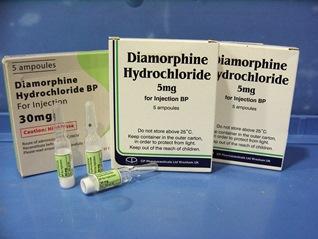
Heroin maintenance continues its slow spread in Europe. In March, Denmark became the latest country to embrace heroin maintenance. The Danes thus join Germany, the Netherlands, Switzerland, and, to a lesser degree, Britain, in the heroin maintenance club. In June, British scientists rolled out a study showing heroin maintenance worked and urging the expansion of limited existing programs there. The following month, a blue-ribbon Norwegian committee called for heroin prescription trials and other harm reduction measures there. Research reports on heron maintenance programs have shown they reduce criminality among participants, decrease the chaos in their lives, and make them more amenable to integration into society.

Opium is Back in the Golden Triangle

Okay, it never really went away in Laos, Burma, and Thailand, and it is still below its levels of the mid-1990s, but opium planting has been on the increase for the last four years in the Golden Triangle. Production has nearly doubled in Burma since 2006 to more than 38,000 hectares, while in Laos, production has more than doubled since 2007. The UNODC values the crop this year at more than $200 million, more than double the estimate of last year's crop. Part of the increase is attributable to increased planting, but part is accounted for by rising prices. While Southeast Asian opium production still trails far behind that in Afghanistan, opium is back with a vengeance in the Golden Triangle.

This Year's Top 10 Domestic Drug Policy Stories

A lot went on in the realm of drug policy reform in 2010. Here is our summation of what we think are the biggest stories of the year.

fire truck lent by Dr. Bronner's for SSDP/Prop 19 campus tour
Marijuana on the Verge -- Prop 19, Public Opinion, and the Looming Sea Change

California's tax and regulate marijuana legalization initiative, Proposition 19, ultimately failed to get over the top on Election Day, but it garnered 46.5% of the vote, the highest ever for a legalization initiative, and generated reams of media coverage, making it the most watched initiative of any in the land this year. The battle for Prop 19 also yielded the broadest coalition yet behind marijuana legalization, as unions, dissident law enforcement groups, and Latino and African-American groups got on the legalization bandwagon in a big way for the first time. Launched with over a million dollars of funding from Oakland cannabis entrepreneur Richard Lee, the initiative garnered significant additional support during the campaign's final months, including a late $1 million donation from George Soros, but too little and too late to make a difference in the nation's largest and most expensive media market. The coalition that came together around Prop 19 is vowing to stay together and work to place another initiative on the ballot, most likely in 2012.

If California has legalization on the ballot in 2012, activists in Colorado, Oregon, and Washington all took steps this year to ensure that it won't be alone. Ill-funded and controversial legalization initiatives missed making the ballot in Oregon and Washington this year, but organizers in both states have vowed to try again, and Sensible Washington, the folks behind this year's effort there, already have a pro-legalization billboard up on I-5 in the Seattle area. In Colorado, organizers bided their time this year amidst the medical marijuana explosion there, but are busy laying the groundwork for a legalization initiative there.

This year also saw a legalization bill pass out of the California Assembly Public Safety Committee in January, a first in the US. While that bill died later in the session, sponsor Tom Ammiano (D-SF), reintroduced it in March and it awaits further consideration in Sacramento. In New Hampshire, a decriminalization bill passed the House in March, only to be killed in a Senate committee in April, while in Washington state, legalization and decriminalization bills got a January hearing before dying in committee later that same month. In Rhode Island, a decriminalization bill was introduced in February and a state legislative commission endorsed it in March, but the bill went nowhere so far. Later in the year, the California legislature passed and Gov. Arnold Schwarzenegger signed a decriminalization bill there. And in November, a marijuana legalization bill passed the House in the US territory of the Northern Marianas Islands, marking the first time a legalization bill has passed a legislative chamber anywhere in the US. It was later defeated in the Senate. No legalization or decriminalization bills passed this year, but the day is drawing near.

A plethora of public opinion polls this year suggest why, as support for pot legalization is now hovering just under 50%. In January, an ABC News/Washington Post poll had support at 46%; in April, a Pew poll had it at 41%. By July, an Angus-Reid poll had support at 52%, while Rasmussen showed it at 43%. In November, a Gallup poll had support for legalization at 46%, its highest level ever and a 15 percentage point increase over just a decade ago. Some of these polls showed majority support for legalization in the West, which will be put to the test in 2012.

Medical Marijuana -- the Ongoing Battle

The acceptance of medical marijuana continued in 2010, as two states, New Jersey and Arizona, along with the District of Columbia, became the latest to legalize the medicinal use of the herb. It's worth noting, however, that medical marijuana is not yet being produced or consumed in any of those places, even though the New Jersey legislation was signed into law in January and the DC medical marijuana initiative was actually revived last year. To be fair, voters only approved the Arizona initiative in November, and regulators there have three more months to come up with enabling regulations.

But the acceptance is by no means complete, and resistance from recalcitrant law enforcement and local governments continues apace. A medical marijuana initiative in South Dakota and an Oregon initiative to create a system of state-licensed, nonprofit dispensaries both failed in November. And despite efforts to pass medical marijuana bills through numerous state legislatures, none beside New Jersey came to fruition this year. Bills have stalled in Alabama, Illinois, Maryland, New York, and Wisconsin, among others, even as they are continually pared back to be ever more restrictive in a bid to appease opponents.

Medical marijuana states that have less loosely written laws -- all via the initiative process, including California, Colorado, Michigan, and Montana -- proved to be highly contested terrain in 2010. The blossoming of hundreds of dispensaries in Colorado this year led to the passage of regulatory legislation this summer, while a similar, if more limited outbreak of envelope-pushing in Montana has legislators there vowing to rein in the industry when they reconvene next year. In Michigan, law enforcement in some locales has arrested people in apparent compliance with the state law. In all three states, battles have also broken out at the city or county level, especially over efforts to ban medical marijuana operations. These fights will continue.

California is a world of its own when it comes to medical marijuana. The most wide open of the medical marijuana states, which, thanks to the language of Proposition 215, allows for medical marijuana to be recommended for virtually anything, it is also the state where legal and political conflict over medical marijuana is most entrenched. Despite more than a decade of litigation, the legality of selling medical marijuana remains unclear, and depending on the attitude of local authorities, dispensaries can be -- and are -- subject to raids and prosecution. The medical marijuana community dodged a bullet in November when Kamala Harris defeated dispensary arch-foe Steve Cooley, the Republican Los Angeles County prosecutor. Meanwhile, in communities across the state, battles rage over banning dispensaries, or, in happier circumstances, over how to permit and tax them. And medical marijuana is increasingly recognized for the big business it is. A growing number of California towns and cities this year voted to tax medical marijuana, and Oakland gave the go-ahead for massive medical marijuana mega-farms, although it may now retreat in the face of rumblings from the Justice Department. None of this got resolved this year, and the fight over medical marijuana in the Golden State is unlikely to wind down any time soon.

The DEA Continues to Misbehave

And then there's the DEA. It was in October 2009 that the Justice Department released its famous memo telling the DEA to butt out if medical marijuana operations in states that had approved them where not violating state law. While DEA raids have certainly declined from their thuggish heyday in the Bush administration, they have not gone away. After a Colorado medical marijuana grower had the temerity to appear on a local TV news program showing off his garden, the DEA raided him in February. The DEA also hit Michigan medical marijuana operations at least twice, in July and again early this month. The DEA has also raided numerous California medical marijuana operations this year, including the first collective to apply for the Mendocino County sheriff's cultivation permit program and a number of beleaguered San Diego area dispensaries. In most cases, the DEA is relying on the cooperation of sympathetic local law enforcement and prosecutors. Making the DEA live up to the Holder memo is a battle that is yet to be won.

The Obama administration's nomination of acting DEA administrator Michele Leonhart is not a good omen. Despite a horrendous record at the DEA, including a stint as Special Agent in Charge in Los Angeles during the height of the Bush administration raids on medical marijuana facilities, and in St. Louis during the Andrew Chambers "supersnitch" perjury scandal, Leonhart's nomination has cleared the Senate Judiciary Committee and is likely to be approved by the Senate as a whole once she takes some actions to improve access to pain medications for seniors in nursing homes -- an issue on which Sen. Herb Kohl was said will cause him to place a hold on a floor vote until she and the agency address it.

Drug War Juggernaut Continues Rolling

While support for marijuana decriminalization and/or legalization continues to grow, and while a number of states have enacted sentencing reforms in response to fiscal pressures, the drug war juggernaut keeps rolling along, chewing up lives like so much chaff. US law enforcement made more than 1.6 million arrests on drug charges last year, more than half of them for marijuana offenses, marking the first year pot busts made up more than half of all drug arrests. The number is actually down slightly from the previous year, but only marginally so, as drug law enforcement keeps humming along. But in the current economic crunch, such a high level of enforcement and punishment may no longer be sustainable. A Pew report found that state prison populations had declined for the first time since the 1970s, if only by 0.4%, although the federal prison population, more than 60% of which consists of drug offenders, increased by 3.4%. Similarly, the Bureau of Justice Statistics reported than US jail populations had decreased for the first time in decades, dropping by 2.3% over the previous year. The tiny turnarounds are a good thing, but there is a long, long way to go.

Rolling Back the Crack/Powder Cocaine Sentencing Disparity


For the first time in the modern drug war era, Congress this year rolled back a harsh drug sentencing law. The sentencing disparity between crack and powder cocaine offenses had been under the gun for more than decade as it became increasingly evident that the laws were having a racially disproportionate impact. Under the old law, five grams of crack would earn you a mandatory minimum five-year sentence, while it took a hundred times as much powder cocaine to garner the same sentence. Although a majority of crack users are white, blacks accounted for more than 80% of all federal crack cocaine prosecutions. A bill to reduce, but not eliminate, the sentencing disparity passed the Senate Judiciary Committee in March and the Senate as a whole weeks later. The House Judiciary Committee had already passed a similar measure that would completely eliminate the disparity, but the House leadership chose to go along with the Senate, reducing the disparity from 100:1 to 18:1, but not completely eliminating it when it voted to approve the bill in July. President Obama signed the bill into law days later. While passage of the bill is a milestone, it leaves work undone. The sentencing disparity, while reduced, still exists, and thousands of prisoners sentenced under the harsh old law remain in prison because the new law lacks retroactivity.

Demands for Drug Testing of Welfare Recipients, the Unemployed, and Even Politicians

The impulse to score cheap political points by unleashing moralistic wrath on the poor and the unfortunate remained alive in 2010. As in years past, efforts to demand drug testing of unemployment recipients or people receiving welfare benefits went nowhere, but not for lack of trying. In fact, the year was bookended by such efforts, starting with a Missouri bill that would have mandated drug testing for Temporary Assistance to Needy Families (TANF) recipients upon "reasonable cause." That bill passed a Senate committee and the House in February, but died in the Senate after a Democratic filibuster. Similarly, drug testing bills in Kentucky, South Carolina, and West Virginia all died, as did a silly Louisiana bill that would have allowed Louisiana elected officials to submit to a voluntary drug test and post the results on the Internet. Later in the year, successful Florida Republican gubernatorial candidate Rick Scott called for mandatory drug testing of welfare recipients, a call he has vowed to carry out as governor.

Attack of (on) the Synthetic Cannabinoids

Synthetic cannabinoids marketed as incense under names like Spice and K-2 first showed up on the national radar last year, and by early 2010 the prohibitionist impulse began rearing its ugly head in state legislatures across the land. Containing synthetic cannabinoids JWH-018 or JWH-073, synthesized by a university researcher in the 1990s, the stuff was available at head shops, smoke shops, and corner gas stations everywhere, as well as on the Internet. Although no overdose deaths linked to synthetic cannabinoids have been reported, there have been reports of emergency room visits and calls to poison centers by people under its influence. But it wasn't the alleged dangers as much as the fear that someone, somewhere could be getting high without getting into legal trouble that impelled a series of statewide and municipal bans. In March, Kansas became the first state to ban synthetic cannabinoids, followed by Alabama in April, Georgia in May and Missouri in July. Also banning the compounds this year were Arkansas, Kentucky, Louisiana, North Dakota, and Tennessee. Similar legislation was also proposed in several more states, including Florida, Ilinois, and New York. Then, in November, the DEA announced an emergency nationwide ban to go into effect in 30 days, meaning you have until Christmas to use the compounds legally. After that, you're a federal criminal.

SWAT Raids and Drug War Killings

It's not just the massive extent of the drug war that generates criticism, but the law enforcement violence and overkill that too often accompanies it. This year, the now infamous SWAT team raid in Columbia, Missouri, in February that left a dog dead and a family traumatized in a raid over marijuana went got national attention when a video of the raid went viral on the Internet at mid-year. Another SWAT raid in Detroit in May generated outrage when it resulted in the death of 7-year-old girl shot by a raider, and that same month, a Georgia grandmother suffered a heart attack when her home was mistakenly hit by the local SWAT team and DEA agents. And then there was the case of Trevon Cole, a 21-year-old black man killed as he knelt in his own bathroom as the apartment he shared with his pregnant girlfriend was raided over small-time pot sales. The police shooter, of course, was found innocent of any wrongdoing in a coroner's inquest, and now Cole's family is suing. So is the family in the Columbia SWAT raid.

Sentencing Reforms Continue in the States

In a bid to reduce corrections spending, a number of states in the last decade have moved to implement sentencing reforms, and 2010 saw the trend continue. In May, Colorado passed reforms that will reduce some drug use and possession sentences, allow greater judicial flexibility in sentencing, and keep some technical parole violators from being sent back to prison. But the package also increases some drug sales and manufacturing sentences. In June, South Carolina passed reforms that will end mandatory minimum sentences for some drug offenses. In August, Massachusetts passed reforms that will eliminate some mandatory minimums in a bill that was watered down from an earlier Senate version.  In all three cases, it was not bleeding hearts but bleeding wallets that was the impetus for reform.

A Congressional Drug Warrior Goes Down in Flames

It couldn’t happen to a nicer guy. This year is also notable for the spectacular May end to the career of inveterate congressional drug warrior Rep. Mark Souder (R-IN). The doughy cultural conservative crusader from the heartland resigned from Congress after admitting at a press conference to having an affair with a female staffer with whom he had once made abstinence videos. Souder is best known to drug reformers as the author of the "smoke a joint, lose your federal aid" provision of the Higher Education Act, and thus deserves credit for almost singlehandedly causing the formation of Students for Sensible Drug Policy. But his enthusiasm for the war on drugs also led him to the chairmanship of the House Government Reform Subcommittee on Criminal Justice, Drug Policy and Human Resources from 2001 to 2007, where he used his position to support harsh drug policies. He was, for instance, a staunch foe of medical marijuana and a loud voice against the Hinchey-Rohrabacher amendments, which would, if passed, have stopped federal raids on medical marijuana patients and providers. To be fair, Souder did offer committee legislation in 2006 to restrict the reach of his student aid penalty, and he was also a key Republican supporter of the recent "Second Chance" prisoner reentry funding legislation. Still, reformers are happy that one of the staunchest and most active drug warriors is out of Congress now, struck down by his own hypocrisy.

The Largest Prison Strike In US History Rages On

Location: 
GA
United States
The sharp increase in the incarceration rate largely due to the drug war and mandatory minimum sentencing have led to the United States becoming the world’s largest jailer. On December 9th, the largest prison strike in US history began in multiple facilities in Georgia. Thousands of those inside have united in a self-imposed lockdown to demand various human rights demands ranging from an end to slave labor, access to health care and education, communication from their families, and an end to cruel and unusual punishment. Despite a harsh crackdown, the strike has been raging on for the last week, and shows no signs of ending.
Publication/Source: 
News Junkie Post (CA)
URL: 
http://newsjunkiepost.com/2010/12/16/the-largest-prison-strike-in-us-history-rages-on/

Thursday Press Teleconference: Clinton Commutation Beneficiaries Call on President Obama to Expedite Clemency for Crack Cocaine Prisoners (Press Advisory)

For Immediate Release: December 15, 2010                      

Contact: Nkechi Taifa (202-641-6605) or Tony Newman (646-335-5384)

THURSDAY PRESS TELECONFERENCE: Clinton Commutation Beneficiaries Call on President Obama to Expedite Clemency for Crack Cocaine Prisoners

Recent federal legislation reducing the 100-to-1 cocaine sentencing disparity will not benefitthose in prison

Advocates will fast and pray for justice on December 22, 10-year anniversary of Clinton crack cocaine commutations

WASHINGTON, DC—Advocates for presidential clemency will join together for a press teleconference on Thursday, December 16 to urge President Obama to expedite clemency for people serving excessive terms under the now-reformed federal crack cocaine sentencing laws. Participants will be commemorating the 10-year anniversary of President Clinton’s commutation of Kemba Smith and Dorothy Gaines, two women sent to federal prison for 24 and 19 years, respectively, for playing peripheral roles in their boyfriends’ drug operations.  Joining the women on the press teleconference will be members of the Crack the Disparity Coalition, a broad coalition of civil rights, faith-based, drug policy, criminal justice reform advocacy groups, and formerly incarcerated people.

Recent changes under the Fair Sentencing Act, signed in August, reduce the sentencing disparity between crack cocaine and powder cocaine from 100-to-1 to 18-to-1 but do not provide relief to thousands of individuals who are already serving time for crack cocaine offenses. Prior to the law’s passage, an individual in possession of 5 grams of crack cocaine (roughly the amount of sugar in a couple of sugar packets) would be sentenced to a federal 5-year mandatory minimum sentence. It took 500 grams of powder cocaine to receive the same 5-year sentence.

The campaign has set up a site (http://www.ipetitions.com/petition/pres_obama-useyourpowertocorrectinjustice/) and a Facebook page, “Holiday Fast and Prayer for Justice,”(http://www.facebook.com/#!/event.php?eid=173873379301719) where others can commit to fasting and prayer and sign a petition to President Obama on behalf of those behind bars under the old crack cocaine sentencing structure.

                        WHAT:           Press Teleconference to urge President Obama to expedite clemency

WHEN:           Thursday, December 16, 1 p.m. ET

CALL IN #:    1-800-311-9402   Passcode: Fairness

WHO:

Kemba Smith Pradia was sentenced as a first time non-violent drug offender to 24.5 years in federal prison even though the prosecutor handling her case said she never handled, used or sold any of the drugs involved. Currently, she is a national public speaker, advocate and founder of the Kemba Smith Foundation.

Dorothy Gaines is a single mother of three who was convicted of minor involvement in her boyfriends’ small-scale crack distribution and served 6 years of a 19 ½ year sentence before she was granted commutation. She currently works with at-risk youth in Mobile, AL.

Hilary O. Shelton is the Director of the NAACP’s Washington Bureau and Senior Vice President for Advocacy and Policy. He played an integral role in the Civil Rights Act of 1991 and other policy measures affecting equality in our society. 

Margaret Love was the former U.S. Pardon attorney under Presidents George H.W. Bush and Bill Clinton. She now represents people applying for executive clemency and advocates for sentencing and corrections reform.

Moderated by: Nkechi Taifa, the Senior Policy Analyst for the Open Society Foundations and Open Society Policy Center, focusing on issues of criminal justice and racial equality.  She also convenes the Crack the Disparity Working Group of the Justice Roundtable, and has worked for over 17 years to eliminate the crack/powder disparity.

Half of Canadians Say Legalize Marijuana

Exactly 50% of Canadians support legalizing marijuana, according to poll results released Monday by Angus-Reid Public Opinion. Some 44% oppose legalization, with 6% undecided. 

Support for legalization has declined slightly when compared to Angus-Reid polls in 2008 and earlier this year. In both those polls, support for legalization was at 53%. But the difference is within the poll's +/- 3.1% margin of error.

Support for pot legalization was highest in Manitoba and Saskatechewan (61%), British Columbia (54%), and Ontario (51%). Support was weakest in Alberta (45%).

The poll also asked about support for legalizing drugs other than marijuana. In no case was support for legalizing hard drugs higher than 10%. 

The poll also queried respondents on whether Canada has a "drug problem" and how serious it is, as well as their positions on several drug policy-related government proposals. Slightly more than a third (37%) thought Canada has a drug abuse problem that affects the whole country, while 41% thought the drug abuse problem was reserved for "specific areas and people." Only 11% thought Canada did not have a serious drug problem, and 10% had no opinion or didn't know.

When it came to policies, there was strong (81%) support for a National Anti-Drug Strategy, including a national youth awareness campaign to keep kids off drugs. But the Conservative government's push against harm reduction measures, such as needle exchanges and Vancouver's safe injection site was supported by only 35% of respondents and its scrapping of the previous Liberal government's pot decriminalization proposal was supported by only 33%.

But somewhat paradoxically, while half of Canadians support pot legalization and nearly as many (47%) support the Liberal decriminalization plan, nearly two-thirds (64%) support the Conservatives' bill to impose mandatory minimum sentences on people growing as few as five pot plants, as well as people convicting of selling other drugs. That number may, however, be an artifact resulting from the question design, which conflated "marijuana grow operators" and "drug dealers."

It appears that marijuana is indeed related to schizophrenia--at least in the Canadian political psyche.

Canadian Senate Passes Mandatory Minimums for Five Marijuana Plants

The Canadian Senate Friday passed the Conservative government's crime bill, S-10, which institutes mandatory minimum sentences for a number of non-violent drug offenses, including a six-month sentence for growing five pot plants. The bill now heads to the House of Commons for hearings and a vote.

Parliament House, Ottawa (Courtesy Wikicommons)
Last year, the bill passed the House, but had been watered down by a Senate amendment raising the bar for mandatory minimums to more than 200 plants. But the bill died before final passage when Prime Minister Steven Harper dissolved parliament. 

This year, after elections strengthened the Conservatives' hand in the Senate, "the body of sober second thoughts" had no stomach for another fight over the bill, which was reintroduced this spring by Justice Minister Rob Nicholson. Liberal members of parliament counted heads and concluded they couldn't pass the amendment again. Another amendment that would have had the mandatory minimums kick in at 20 plants was defeated earlier.

The bill would impose six-month mandatory minimums for growing five or more plants with the intent to sell and one-year minimums when marijuana dealing is linked to organized crime or a weapon is used. The bill would also impose mandatory minimum one-year sentences for dealing hard drugs when linked to organized crime or weapons and two-year sentences for dealing hard drugs to minors or near a school or other place where young people congregate.

"The bill is a disaster for Canada," said Jacob Hunter of WhyProhibition.ca. "S-10 will imprison thousands of Canadians for victimless crimes, send people to jail for growing 6 marijuana plants, making any hashish or baked goods, and a host of other offenses. There is no evidence that S-10 will work," Hunter said. "Indeed, every scientific study says it will fail. We know that prohibition has never worked, and we know that mandatory minimum sentences only increase the violence in our society."

Activists in Canada are working with opposition parliamentarians in the House of Commons to try to block it there. Stay tuned.

Ottawa
Canada

Mandatory Minimums for Drug Crimes Are a Giant Step Backward for Canada (Opinion)

Location: 
Canada
Erika Sasson, a former federal prosecutor in Toronto, opines that when Prime Minister Stephen Harper prorogued Parliament last December, at least one good thing happened: Bill C-15 was temporarily put to rest. That bill sought to introduce mandatory minimum prison sentences for drug offenses, in order to tackle “organized crime and serious drug offenses.” Now in its newest iteration as Bill S-10, the draft legislation has already survived a second reading and has a very good chance of becoming law.
Publication/Source: 
The Globe and Mail (Canada)
URL: 
http://www.theglobeandmail.com/news/opinions/opinion/mandatory-minimums-for-drug-crimes-are-a-giant-step-backward-for-canada/article1801674/

Supreme Court Upholds Gun Enhancement for Drug Crimes

In a unanimous decision Monday, the Supreme Court upheld the sentences of two men who received mandatory minimum five-year sentencing enhancements for possessing a gun during the commission of a drug offense. Under federal law, the presence of a weapon merits the five-year sentence, which must run consecutive to any other sentences.

US Supreme Court
The case, Abbot v. US, actually consolidated two different cases. In the first, Philadelphia resident Kevin Abbott was convicted of drug trafficking, a related gun charge, and being a career criminal. He was sentenced to 15 years on the career criminal count and five years on the gun count, and the trial judge added them together to sentence him to 20 years in total.

In the second case, Wichita Falls, Texas, resident Carlos Gould pleaded guilty to a cocaine trafficking count with a 10-year mandatory minimum sentence and a related gun count with a five-year mandatory minimum. The trial court sentenced him to 11 years and five months on the cocaine charge, then added another five years for the gun count.

In appealing their sentences, both men pointed to a 1998 revision of the 1968 federal gun control law. In that revision, Congress added a new preface saying the gun enhancement would apply "except to the extent that a greater minimum sentence is provided." Both men argued that their longer sentences on related charges should have voided the additional five years on the gun convictions.

But Justice Ruth Bader Ginsburg, writing for the court, didn't agree, even though she conceded that ruling in their favor might make sense as a matter of policy. "We do not gainsay that Abbott and Gould project a rational, less harsh, mode of sentencing," she wrote. "But we do not think it was the mode Congress ordered."

Congress was not aiming for leniency when it revised the law in 1998, Ginsburg wrote. Nor did it mean to say that a longer mandatory minimum for related crimes voided the five-year gun sentence.

"We doubt that Congress meant a prefatory clause, added in a bill dubbed 'an act to throttle criminal use of guns,' to effect a departure so great from" the original purpose of the 1968 law," Ginsburg wrote. That purpose, she continued, was "insistence that sentencing judges impose additional punishment."

Monday's ruling is just one more indicator that the Supreme Court is not overly concerned about long, sometimes decades long, prison sentences meted out to drug offenders who possess guns, whether or not the weapon was used or displayed. The poster boy for the injustice of the gun sentencing enhancement is Weldon Angelos, a Salt Lake City pot dealer and aspiring rap music empresario who is now serving a 55-year sentence because he carried a pistol as he went about his business, even though he never shot or threatened anyone or brandished his gun. The Supreme Court upheld his conviction in 2006.

Washington, DC
United States

NORML Lawyers' Advice to Marijuana Suspects: STFU [FEATURE]

A panel of marijuana criminal defense attorneys on the opening day of NORML's 39th Annual National Conference in Portland Thursday were unanimous and emphatic on one thing people with pot should do when confronted by police: exercise their right to remain silent.

"Don't talk to those people," warned Oakland defense attorney and NORML board member Bill Panzer. "Their job is to throw your ass in jail. They are not there to help you."

"Don't talk to the cops," agreed Seattle defense attorney Jeffrey Steinborn. "No matter what you say to a cop, they will write down what they want to hear. They can't misinterpret stone cold silence."

"Shut the fuck up," punctuated Seattle defense attorney Douglas Hiatt, noting that people were understandably under stress when having encounters with law enforcement. People are prone to try to talk their way out of trouble, he said. "This is not the time you're going to be doing quality thinking."

Less colorful variations on the theme also came from Columbia, Missouri, defense attorney and NORML board Dan Viets, Portland defense attorney John Lucy, and Florida defense attorney and NORML board member Norm Kent. All were members of the panel "Warning: Marijuana is Still Illegal for Non-Patients! Legal Defenses and Strategies for Cannabis Consumers," moderated by Kent.

Telling pot people they have -- and should exercise -- the right to remain silent isn't anything new. Groups from the ACLU to Flex Your Rights have long offered the same counsel, as will any defense attorney if you ask him. But with millions of marijuana consumers, legions of police ready to take them down, and 800,000 marijuana arrests a year, nearly 90% for small-time possession, this panel of pot friendly legal pros clearly felt it was a message worth reiterating.

The defense attorneys had plenty of other admonitions for pot smokers, growers, and dealers, all frankly designed to help them flout laws the lawyers consider immoral. The tough warnings were, however, leavened by outbursts of laughter as they shared stories of bumbling and hapless clients.

Like Norm Kent's tale of a home in Florida where police suspected a marijuana grow was going on, but lacked sufficient evidence to obtain a search warrant. They conducted a "knock and talk," where they simply knocked on the front door to see if the resident would let them in. Kent's advice: Don't talk to the police. In fact, you don't even have to acknowledge their presence.

That's not what happened. Instead a 17-year-old opened the door to the knocking police, was asked about marijuana being grown at the residence, and blurted out, "It's my dad's dope; not mine!"

Kent got a client he wouldn't otherwise have had because the kid didn't know how to respond properly (by not even answering the door, or not opening it). "You have the right to say no," he said. "Just say no."

"Don't even open the door," said Steinborn. "Make them break it down."

Steinborn, a white-haired veteran, said he had three rules: "Only break one law at a time," he said, especially when driving. "The second rule is leave the paraphernalia at home. Learn to roll a joint!" he exclaimed. "The third rule is to always be courteous, but ask them if you're free to go."

"Don't text message," groaned Panzer. "If you've got 'Dude, I loved the purp! Can I get 3 lbs?' on your phone, they will find it, even if you deleted it."

That proscription should apply to any use of electronic media for conducting marijuana business, the attorneys said. Pot leaves on your Facebook page could help police convince a judge their request for a search warrant had merit. Photos of you proudly displaying your garden would be even more incriminating.

"Anything on email or the Internet is out there," said Steinborn.

Hire them or attorneys like them for your own good, especially if you're growing or selling, they pleaded. And don't wait until after you've been arrested.

"If you're a pot grower or dealer and you don’t have a lawyer on retainer, you're nuts," said Lucy. "If you're going to engage in felonious conduct on a regular basis and you haven't spent $250 for a lawyer…" he trailed off.

Guns and marijuana don't mix, the defense attorneys warned, citing mandatory minimum federal and state sentencing enhancements that come into play if a gun is found in the home, even if it was not used or brandished. You can have your guns or you can have your grow, they said, but you shouldn't have both or you're exposing yourself to serious time.

The war on marijuana is ultimately a war on the people who grow, sell, and use it. This NORML panel was quite frank about being on the other side of the battle and was offering up some basic training Thursday afternoon.

Portland, OR
United States

Obama Takes a Crack at Drug Reform (Opinion)

Drug Policy Alliance ED, Ethan Nadelmann, opines on President Obama's drug policy reform moves since entering office.
Publication/Source: 
The Nation (NY)
URL: 
http://www.thenation.com/article/154164/obama-takes-crack-drug-reform

Drug War Issues

Criminal JusticeAsset Forfeiture, Collateral Sanctions (College Aid, Drug Taxes, Housing, Welfare), Court Rulings, Drug Courts, Due Process, Felony Disenfranchisement, Incarceration, Policing (2011 Drug War Killings, 2012 Drug War Killings, 2013 Drug War Killings, Arrests, Eradication, Informants, Interdiction, Lowest Priority Policies, Police Corruption, Police Raids, Profiling, Search and Seizure, SWAT/Paramilitarization, Task Forces, Undercover Work), Probation or Parole, Prosecution, Reentry/Rehabilitation, Sentencing (Alternatives to Incarceration, Clemency and Pardon, Crack/Powder Cocaine Disparity, Death Penalty, Decriminalization, Drug Free Zones, Mandatory Minimums, Rockefeller Drug Laws, Sentencing Guidelines)CultureArt, Celebrities, Counter-Culture, Music, Poetry/Literature, Television, TheaterDrug UseParaphernalia, ViolenceIntersecting IssuesCollateral Sanctions (College Aid, Drug Taxes, Housing, Welfare), Violence, Border, Budgets/Taxes/Economics, Business, Civil Rights, Driving, Economics, Education (College Aid), Employment, Environment, Families, Free Speech, Gun Policy, Human Rights, Immigration, Militarization, Money Laundering, Pregnancy, Privacy (Search and Seizure, Drug Testing), Race, Religion, Science, Sports, Women's IssuesMarijuana PolicyGateway Theory, Hemp, Marijuana -- Personal Use, Marijuana Industry, Medical MarijuanaMedicineMedical Marijuana, Science of Drugs, Under-treatment of PainPublic HealthAddiction, Addiction Treatment (Science of Drugs), Drug Education, Drug Prevention, Drug-Related AIDS/HIV or Hepatitis C, Harm Reduction (Methadone & Other Opiate Maintenance, Needle Exchange, Overdose Prevention, Safe Injection Sites)Source and Transit CountriesAndean Drug War, Coca, Hashish, Mexican Drug War, Opium ProductionSpecific DrugsAlcohol, Ayahuasca, Cocaine (Crack Cocaine), Ecstasy, Heroin, Ibogaine, ketamine, Khat, Marijuana (Gateway Theory, Marijuana -- Personal Use, Medical Marijuana, Hashish), Methamphetamine, Nicotine, Prescription Opiates (Fentanyl, Oxycontin), Psychedelics (LSD, Mescaline, Peyote, Salvia Divinorum), Synthetic Drugs (Mephedrone, Synthetic Cannabinoids)YouthGrade School, Post-Secondary School, Raves, Secondary School