Police Raids

RSS Feed for this category

DEA Hits More CA Medical Marijuana Dispensaries

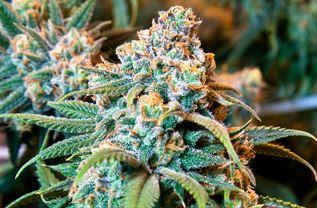
DEA agents conducted raids on two more California medical marijuana dispensaries Monday, according to local press reports. Monday's targets were the Medizen dispensary on Northgate Boulevard in Sacramento and the Central Valley Caregiver's Co-operative in nearby Stockton.

The raids are only the latest evidence of the Obama administration's ramped-up war on medical marijuana distribution in the Golden State. They come less than two weeks after the state's four US Attorneys announced they were aggressively going after not only dispensaries, but landlords and property owners. They also come less than a week after a DEA raid on Northstone Organic, a fully state- and county-law compliant medical marijuana grow and co-op in Mendocino County.

In Sacramento, a Medizen employee told local TV news that neither the dispensary nor its landlord had been the object of a threat letter from the feds, but that the business was forced to close without warning.

"I was supposed to open at 10am. They got here at 7:30. I heard... they came in and basically took all our stuff, seized everything, took all our cash and product and stuff and that's basically it," said employee Mike Amarao. "They just said they're shutting all the clubs down in Sacramento, that's all we heard."

An attorney representing several Sacramento dispensaries said that some were going out of business rather than weather the threat of federal harassment and prosecution. That's going to hurt the city, which instituted a dispensary tax in July. It was estimated that the tax would generate $2 million for city coffers, but without dispensaries that figure would become inoperative.

There are no details on the Stockton raid.

Meanwhile, in Southern California, Orange County NORML and Americans for Safe Access are gearing up for a Tuesday night protest in Lake Forest in Orange County, where eight dispensaries have been ordered to close by a landlord whose bank account has been seized by federal officials.

Activists there accuse local officials of calling in the feds to do their dirty work after their own anti-dispensary efforts were blocked in state court. The city had spent $600,000 in its failed legal efforts.

Federal agents Saturday handed out asset forfeiture notices to some of the dispensaries. As of Tuesday, five of the eight dispensaries had already closed, with the others reported to be closing by day's end.

CA
United States

DEA Raids California, Colorado Medical Marijuana Operations

Putting some law enforcement muscle behind this month's words of warning from federal prosecutors that a new crackdown on medical marijuana distribution was getting underway, DEA agents late last week raided a model regulated medical marijuana grow in Northern California, a medical marijuana dispensary in Southern California, and a medical marijuana grow in Colorado.

"The California marijuana industry is not about providing medicine to the sick," claimed Laura Duffy, the San Diego-based US Attorney at the October 8 Sacramento press conference. "It's a pervasive, for-profit industry that violates federal law."

But the operation raided Thursday, Northstone Organics in Mendocino County, has been touted as a model medical marijuana grow. It holds a Mendocino County sheriff's permit to grow the 99 pot plants seized and destroyed by the feds, pays an estimated $8,500 annually in fees to remain compliant, and has even had sheriff's deputies testify favorably about it in a state court case where Northstone drivers delivering medicine to patients were arrested in Sonoma County.

Northstone Organics founder and owner Matt Cohen told the Ukiah Daily News Friday that heavily-armed agents raided his home and property early Thursday morning, destroying plants and hauling off evidence, but not charging him with a crime.

"They destroyed our home and eradicated everything," Cohen said. "They came in, guns blazing. They calmed down and were pleasant at the end, but they came in with machine guns."

Cohen said the smash and grab raiders included six DEA agents, a state Bureau of Narcotics Enforcement agent, and a Mendocino County sheriff's deputy, "who didn't know what he was walking into here."

Northstone is a strict cooperative, growing the plants it distributes to members in the area, as well as in San Francisco and Los Angeles. It is fully compliant with California's medical marijuana laws.

"If we're not legal, nobody's legal," Cohen said. "We actually are a legitimate not-for-profit corporation. We worked with the county to get where we are, and there are illegal growers all around us. We fell under what the US Justice Department said was the threshold for prosecution."

The message the feds are sending? "Go back underground, I guess; make our community a less safe place to be," Cohen said.

The Northstone Organics raid was "shameful and despicable," said Dale Gieringer of Cal NORML, which reported the raid as it was still going on Thursday morning. "The DEA is doing nothing but encouraging lawlessness and disobedience to the law, said Gieringer."This is a victory for the Mexican cartels."

A day earlier and several hundred miles to the south, DEA agents and Pomona police raided the Green Cross USA dispensary, seizing marijuana, marijuana edibles, and records. But unlike the Northstone Organics raid, the raid on Green Cross appears to have been instigated by local authorities, who called in the feds to help.

Pomona Police Capt. Paul Capraro told the Daily Bulletin that the dispensary owner and landlord had received threat letters from the US Attorney's office. The letters said "if they didn't close down they would be subject to criminal prosecution, civil prosecution, and property seizure," he said.

Pomona banned dispensaries with a March 2008 ordinance, and had cited the dispensary in March for operating without a business permit. The owner, Jeffrey Maul, was convicted of operating without a business license, but is appealing that conviction.

The joint city-DEA action sends a message to other dispensaries in Pomona, Capraro said. "Our message is simple, that dispensaries are not lawful businesses in Pomona."

But it's not just a local case, said DEA spokeswoman Sarah Pullen. "We seized contraband, but also gathered evidence for the ongoing investigation," she said, adding that arrests could be forthcoming and that the city and the DEA had worked together for months on the case.

Meanwhile, in Colorado, what originated as a local law enforcement raid against a medical marijuana grower who contracted to grow as part of a larger grow at Cherry Top Farms in Denver morphed during the day into a joint local-state-federal raid replete with carloads of DEA agents and US Attorney representatives.

"We are 100% compliant" with state medical marijuana laws, a Cherry Top Farms manager told Westword after the raid. "But when the feds walk in, they can do whatever the hell they want." Local police had issues with the contract grower who was the original target of the raid, the manager said. "They came to take care of him, but when they got here, they were unable to turn a blind eye, and they did a lot of damage," he complained.

When the first officers showed up late Thursday morning, "it was the Denver Police Department, and then it was the state Medical Marijuana Enforcement Division. Then there were the feds. When they got here, they decided they needed a search warrant for us, too," the manager explained. "They lined us all up and questioned us and took our phones and [state mandated ID] badges. Then they gave some of the option to leave, after they handed over their IDs. But a few of chose to stay, and we were forced to wait in a two-parking space area, probably 10 feet by 10 feet, from 11:00am to 11:00pm. They did let us go to the bathroom, but you definitely had to ask permission to take a piss."

The raiders cleaned out Cherry Top, the manager said. "They took all of our live plants, all of our medicine, all of our extracts, and all of our baked goods," plus at least one more thing. "We have these cute t-shirts, little tank-top titty shirts, and one of the female officers put one on and was dancing around. I said to one of the agents at the door, 'I'm not trying to be disrespectful, but that doesn't seem to be very professional.' And he said, 'It's been a long day. We're just trying to have some fun.'"

The t-shirt has vanished, the manager said. "It's not here. She took it."

After last week's threats from prosecutors in Sacramento, it now appears that the feds are backing up those threats with actions. The medical marijuana wars are heating up again.

Man With Gun Killed in Kentucky Drug Raid

[Editor's Note: This year, Drug War Chronicle is trying to track every death directly attributable to domestic drug law enforcement during the year. We can use your help. If you come across a news account of a killing related to drug law enforcement, please send us an email at psmith@drcnet.org.]

[Editor's Note: After we published this article, we were contacted by a woman identifying herself as the sister of the victim. See her comments at the end of the article.]

police training in Kentucky
A Jeffersonville, Kentucky, man was shot and killed in his home by undercover police during a drug raid Thursday. Terry Pruitt, 45, becomes the 33rd person to be killed in US domestic drug law enforcement operations so far this year.

According to police, members of the Buffalo Trace Narcotics Task Force were conducting a drug bust in the home when Pruitt pulled a gun and a member of the unit shot and killed him. In another version of events, police said Pruitt shot at an officer before the officer returned fire.

But a Kentucky State Police spokesman told WKYT-TV only that Pruitt had pointed a weapon at police. "The individual inside the residence took an offensive posture and pointed a gun at one of the officers and then the officer reciprocated," said Trooper Endre Samu. Samu said that Pruitt had been hiding under a bed, then got up and threatened one of the undercover agents.

The raid took place shortly before 5:00pm. There is no indication whether officers had announced their presence or if the raid was a "no-knock" raid.

Pruitt's girlfriend, Laura Johnson, 52, who lived in the house with him was detained at the scene and later charged with an unspecified drug trafficking offense. She was being held at the Montgomery County Jail.

Neighbor Angela Martin said she was "in shock" over the killing. "I'm still kind of in shock over it because he didn't seem like the type to be involved in that.  He was a great neighbor.  He came over and mowed my grass when my mower was down.  He was real friendly, real clean-cut guy, real neighborly," Martin said. "It's a horrible story that ended bad, and I just hate seeing something like this happen. That's somebody's son, somebody's father, somebody's grandson, you know, and it's just a horrible way for him to go out," said Martin.

The killing will be investigated by the Kentucky State Police.

In an email to Drug War Chronicle, a woman describing herself as Pruitt's sister, Barbara Seebach questioned the police version of events."His girlfriend says he was in bed asleep, and I believe her," she wrote. "I know he wouldn't fit under the bed, and if he was raising up from the side, why couldn't they have grabbed him before he got up? It doesn't make any sense, and I think someone needs to sit down with the family and tell the truth."

In a second email, Seebach described what led to the bust. "I know that Laura was charged with trafficking four pills," she wrote. "She sold four pills to someone she thought was a friend, and the next thing you know the cops were at her door. So, is that a set-up, or what?"


Jeffersonville, KY
United States

Victims of Deadly Tucson SWAT Raid Begin Legal Action

The attorney for the family of Jose Guerena, the ex-Marine gunned down in his own home as a Pima County SWAT team burst in, has filed a notice of claim. Such a legal maneuver lays the groundwork for a damage-seeking lawsuit.

Jose Guerena survived tours of duty in Iran and Afghanistan, but not his encounter with a Tucson, AZ SWAT team.
Earlier reports said that the lawsuit will seek $20 million in damages from the Pima County Sheriff's Office, several Pima County municipalities, and the SWAT team members. It will claim that the SWAT team used excessive force and was negligent in the raid.

Guerena, who shared the home with his wife and young son, died after SWAT team members fired 71 rounds at him as they burst through his door and confronted him in his underwear in a hallway holding a weapon. The fatal May 5 raid was part of a series of raids that day in what police said was the investigation of a drug rip-off gang.

But no drugs, cash, or illegal items were found at Guerena's home, and, to date, no one has been arrested for anything in relation to that investigation or those raids. The officers involved in the raid have already been exonerated of any wrongdoing by local officials.

On Friday, Guerena family attorney Chris Scileppi told Fox 11 News that a newly released sheriff's department video showing Vanessa Guerena being pulled from the house and 4-year-old Joel Guerena running to safety after his father had been shot demonstrated just how horrific Guerena's death at the hands of police had been.

"They just give a snapshot of the horror that his wife his small child went through as they crawled past their dying husband and dying father," said Scileppi.

Two days earlier, Scileppi filed the 15-page claim outlining what it calls reckless actions by the SWAT team.  "They were negligent and grossly negligent in how they performed this the execution of this warrant in killing Mr. Guerena," said Scileppi. The $20 million figure would "accommodate the children's loss of their father," he said. "No amount of money can replace Mr. Guerena to his wife, to his children, to his family."

The two sides have 60 days from last week to reach an agreement on the claim, or a lawsuit will be filed. Comments from Mike Storie, an attorney for Pima County SWAT team suggest, that agreement is unlikely and this matter will end up in the courts.

The $20 million figure was "obscene," he told Fox 11. "I would be absolutely shocked if anybody settles this case and did not fight it vigorously and if asked, I would say it would be a ridiculous result," said Storie. "I think a dollar is excessive. Any type of settlement for any type of award would be unwarranted in this case."

Jose Guerena was the 25th person to be killed this year in domestic law enforcement operations. This year's toll of drug war killings is currently at 32.

Tucson, AZ
United States

This Week's Corrupt Cops Stories

We've got sticky-fingered SWAT cops, we've got perverted probation officers, we've got smack-slinging uniformed police officers, we've got strung out, pill-stealing cops, and, of course, we've got crooked jail guards. Let's get to it:

Drug prohibition's filthy lucre tempts law enforcement (image via wikimedia.org}
In Waycross, Georgia, a Ware County prison guard was arrested last Friday after he set off a metal detector upon arriving at work and was found carrying contraband cell phones and marijuana. Theodis Martin, 25, is charged with possession of marijuana with intent to distribute, possession of more than an ounce of marijuana, bringing prohibited articles to the prison without the warden's permission, possession of prohibited items inside the guard line and trading with inmates without the consent of the warden. Although he was fired from his job the same night, he is still at the Ware County Jail.

In Kansas City, Kansas, three Kansas City Police SWAT team members pleaded not guilty Monday to federal charges they stole cash and other property from homes while serving search warrants, including one that was part of a federal sting operation. Officers Jeffrey Bell, Darryl Forrest, and Dusting Stillings are accused of stealing video game equipment during searches at several homes last year. Complaints from residents led to the sting, which led to additional charges the crooked trio stole video game equipment, other electronics, and $640 in cash in that incident. Bell and Forrest were charged with conspiracy against rights, deprivation of rights and theft. Sillings was charged with conspiracy against rights and theft. They each face up to 10 years in prison and a $250,000 fine if convicted on the conspiracy charge. The other two charges carry a maximum one-year prison term and a $100,000 fine.

In Baltimore, a Baltimore police officer was indicted Tuesday along with four other people on drug and gun charges. Officer Daniel Redd and the others were charged with conspiracy to distribute heroin. According to court documents, the other drug ringleader obtained heroin from Africa and distributed it to Redd and others. Redd is also accused of distributing heroin to others, including incidents that took place in the Northwest District Police Station parking lot while Redd was in uniform. He is also charged with carrying a firearm while engaged in drug trafficking, which carries a mandatory minimum five-year federal prison sentence.

In Provo, Utah, a former Provo police officer was sentenced last Friday to probation for stealing prescription medications from a home where he had previously responded to a call. Tony Brewer, 33, was arrested after a Provo family said he went to their home to investigate a 911 call, then returned several times and stole Lortab pills. A family surveillance camera caught him in the act. Brewer's attorney said he got hooked on pain pills after a police training injury. He has since undergone drug treatment. He was charged possession of a controlled substance and theft, but the theft charge was dropped as part of the plea deal. He has to do six months of probation and pay a $623 fine.

In Portland, Oregon, a former federal probation officer was sentenced Monday to 10 years in prison for sexually abusing five women under his supervision between April 2005 and June 2009. Mark John Walker, 52, had pleaded guilty in April to charges he violated the civil rights of his victims by sexually abusing them. As part of his plea agreement, he admitted forcing one woman to have sex with him and fondling four other women. Several of the women were drug defendants on probation.

SWAT Reporting Bill Filed In Michigan

A bill that would impose reporting requirements on law enforcement SWAT teams has been introduced in the Michigan House. The bill, House Bill 4857, would require those specialized paramilitary units to file a report when they forcibly enter a home, discharge a weapon, or injure or kill a suspect.

At least one Michigan legislator wants to know how often SWAT teams are deployed. (image via wikimedia.org)
The sponsor, Rep. Tom McMillin (R-Rochester Hills) told the instate Livingston Daily he introduced the bill in part because of concerns stemming from a May 2010 Detroit police SWAT raid in which police shot and killed 7-year-old Aiyanna Jones. He said he was most concerned about the lack of information from SWAT teams, which use automatic weapons and grenades, as well as kicking down doors.

"These are areas where a little transparency wouldn't hurt," McMillin said. "I think it will raise some awareness of where reporters and other interested citizens may have additional questions. These are not your typical traffic stops," he added.

As introduced, the bill would apply to SWAT teams within the Michigan State Police, county sheriff's departments, and municipal police departments. That formulation is leading some law enforcement officials to say that it would not apply to interagency drug task forces, such as the LAWNET task force that raided the Marshall Alternatives medical marijuana dispensary in Fowlerville earlier this year.

Livingston County Sheriff Bob Bezotte, who presides over LAWNET, said the reporting bill wouldn't apply to task force actions and attacked the measure as a "political" effort to deal with isolated instances.

"We've got enough laws -- so from that aspect, I disagree with what he wants to do," he said "The state can't come down and tell me how to run my department," Bezotte added. "What they end up doing is causing more problems than we originally had," he added.

Drug units deserve special consideration, Bezotte added. "It's not to try to get away with anything. I think if you've worked with a drug unit, you would understand you don't want anyone knowing who you are, especially if you're doing undercover buys," he added. "I would side with the drug units on that one in terms of secrecy."

But that interpretation didn't fly with attorney Denise Pollicella, who represents Marshall Alternatives. "It absolutely would apply to LAWNET," she said."I know, personally, of three different occasions and three different raids where they did not list all of the property and cash that they took on their inventory," Pollicella added.

The bill was a necessary "accountability measure," she said. "I think that if the public actually realized how prevalent these raids are, and how unnecessary the extreme force is and how traumatizing it is for the victims, there would be significantly more outrage," she said.

McMillin said he wasn't sure whether multiagency drug task force SWAT teams would be covered by the bill as written. He said the bill could become more agency-specific as it moves through the legislative process. It is currently in the House Judiciary Committee, with a hearing set for July 27.

The only other state to impose reporting requirements on SWAT teams is Maryland. That law passed only after a Prince Georges County SWAT team made the mistake of practicing its usual tactics on the mayor or Berwyn Heights, who was both innocent of any wrongdoing and in a position to be able to right the wrong inflicted on him.

MI
United States

Mexico Drug War Update

by Bernd Debusmann Jr.

Mexican drug trafficking organizations make billions each year smuggling drugs into the United States, profiting enormously from the prohibitionist drug policies of the US government. Since Mexican president Felipe Calderon took office in December 2006 and called the armed forces into the fight against the so-called cartels, prohibition-related violence has killed more than 38,000 people, including more than 15,000 last year. The increasing militarization of the drug war and the arrest or killing of dozens of high-profile drug traffickers have failed to stem the flow of drugs -- or the violence -- whatsoever. The Merida initiative, which provides $1.4 billion over three years for the US to assist the Mexican government with training, equipment and intelligence, has so far failed to make a difference. Here are a few of the latest developments in Mexico's drug war:

Wednesday, June 28

In Coatzacoalcos, authorities arrested a Zeta member who is thought to be involved in the Tamaulipas murders of 72 migrants last year. Barrios Caporal, "Erasmo," allegedly confessed to being second-in-command to Martin Omar Estrada Luna, "Comandante Kilo", the Zeta chief for the San Fernando, Tamaulipas area at the time of the massacre.

In Ciudad Juarez, twelve people were killed. In one incident, five men were shot dead by two men armed with assault rifles. In another incident, a police investigator's wife was killed along with another man after gunmen tried kill the policeman, who escaped.

Thursday, June 30

In Ciudad Juarez, six people were murdered. Among the victims were 3 members of a family who were shot in El Barreal. According to researcher Molly Molloy, Thursday's killings brought the total number of murders to 153 for the month of June.

Friday, July 1

In the city Chihuahua, authorities found a "narco-banner" which specifically threatened DEA agents operating in the area. The note said that they (it is unclear which organization) had identified agents and would decapitate them.

In Zacatecas, at least 15 people were killed and 17 captured after a protracted fire fight between Mexican Marines and suspected Zetas in the town of Lourdes.

Saturday, July 2

In Matamoros, a well-known Catholic priest was shot and killed during a fire fight between suspected Zetas and the Mexican army. Father Marco Antonio Duran Romero was the host of a local tv show and was frequently on the radio. He was killed on Saturday after night as Mexican soldiers battled Zetas who were trying to enter the city, the stronghold of the rival Gulf Cartel.

In Texas, the State Department of Public Safety advised US citizens to avoid travel to the Nuevo Laredo area across the Rio Grande from Laredo, Texas. According to the Department, the US has received information that the Zetas may have been planning assaults on US citizens in the city.

Sunday, July 3

In Chihuahua, a group of heavily armed gunmen traveling in luxury SUVs attacked a speedway, killing a driver and one of his assistants. Another man -- the deputy director of crime prevention in the city -- was wounded in the attack and was likely the primary target.

Monday, July 4

In Atizapan, near Mexico City, federal police captured the 3rd highest ranking Zeta commander, Jesus Enrique Rejon Aguilar, a.k.a. "El Mamito." Rejon, 35, is one of the founding members of the organization, which he joined in 1999 after deserting from the army. In addition to other crimes, Rejon was wanted in connection with the February incident in which an America ICE agent was killed and another was wounded.

In Aguascalientes, a local drug-trafficker linked to La Familia was shot and killed by police inside a house. Nicolas Mora Ovando, "Papa Nico", was a former police officer and head of a local gang called "La Oficina."

Tuesday, July 5

In San Nicolas, Nuevo Leon, two police officers were gunned down in their squad car by a group of gunmen armed with automatic weapons.

[Editor's Note: We cannot accurately tally the drug prohibition-related killings in Mexico at this time. El Universal, the only Mexican newspaper that was doing so on a regular basis, has stopped. We will have to rely on official pronouncements on the death toll, and will report them when they happen. Below are the numbers through the end of last year. With more than 1,400 reported dead in April alone, this year's toll could well exceed last year's. As of this month, we believe the total death toll has surpassed 38,000.]

Total Body Count for 2010: 15,273

Total Body Count for 2009: (approx.) 9,600

Total Body Count for 2008 (approx.): 5,400

Total Body Count for 2007 (approx): 4,300

Mexico

Virginia Police Kill Old Man in Pill Raid

[Editor's Note: This year, Drug War Chronicle is trying to track every death directly attributable to drug law enforcement during the year. We can use your help. If you come across a news account of a killing related to drug law enforcement, please send us an email at psmith@drcnet.org.]

Police in Hampton, Virginia, executing a search warrant for prescription pain pills shot and killed a 69-year-old homeowner after he fired on them inside the house. William Cooper becomes the 30th person killed in US domestic law enforcement operations so far this year.

http://www.stopthedrugwar.org/files/hampton-police-badge.jpg
According to the Daily Press Hampton News, police sought a search warrant after a confidential informant told them Cooper had sold methadone, Percocet, and "several other unknown prescription pills" from his home. Police executed the warrant just after 10:00am Saturday, forcing his front door open and entering the residence.

Hampton Police spokesman Jason Price said police identified themselves when they arrived at the house. "We did knock and announce our presence," he said. "It was not a no-knock search warrant."

A common police practice in executing warrants is to announce their presence with loud knocks on the doors and shouts of "Police!" or similar phrases, then wait a matter of seconds before breaking down the door, effectively making them knock and announce raids in technical legal terms only. Neighbors reported the police had forced their way in, and the door was visibly broken.

Price said there was an exchange of gunfire, with Cooper shooting first and the officers firing back. Cooper was pronounced dead at a local hospital an hour later.

Police announced Tuesday
they had seized four prescription pain pill bottles -- three of them empty -- and a number of weapons in the retiree's home. They consisted of one empty bottle of Oxycontin and three bottles of Oxycodone-acetaminophen (Percocet), with one containing pills. They also seized 16 other pill bottles, including ones containing drugs used for treating the symptoms of arthritis, diabetes, and heart disease. Police also seized Cooper's wallet, $903 in cash, and his 2000 Lexus, as well as a vehicle title and "financial documents." They alleged the 11-year-old car was connected to the drug sales.

"We did locate evidence that supports the charge of distribution of illegal narcotics," police spokesman Jason Price said Tuesday. Police did not say whether Cooper had prescriptions for the pain pills.

But friends of Cooper said he used a cane, suffered from knee and back pain, and took lots of pain medications. Cooper complained that the drugs he was taking "weren't enough" for the pain, said Richard Zacharias, 58, a retired NASA employee who was renting a trailer home from Cooper. He also said that Cooper had poor eyesight because of cataracts and often slept late. Those factors might have caused him not to realize it was police in his home at 10:00am, Zacharias said.

But Price said police would continue to identify themselves as they moved through the home. "It's very obvious that we're the police," he said.

"It doesn’t smell right," Zacharias protested. "He wasn't real big, he wasn't real threatening." The police killed Cooper "in his own house, and that doesn't sit right with me," he said. "People around here sleep with a gun beside their bed because of all the home invasions we've had. The guy was a nice guy. The guy was a good guy."

The two so far unnamed police shooters are now on administrative leave with pay pending an investigation. But Hampton Police Chief Charles Jordan Jr. didn't see any need to wait for that. "The investigation thus far supports the actions of the officers," Jordan said Saturday. "They were met with deadly force and had no alternative other than to return fire."

Hampton, VA
United States

Tucson SWAT Team Cleared in Killing of Ex-Marine

The Pima County Sheriff's Department SWAT team that gunned down a former Marine in his Tucson home during a raid in which no drugs were found was cleared Tuesday of any wrongdoing in the incident. The victim, Jose Guerena, 26, died in a hail of bullets in his underwear in a hallway of his home as he responded gun in hand to his wife's report of armed intruders.

Jose Guerena
SWAT team members coming through his front door fired at least 70 rounds at Guerena, striking him at least 21 times. Guerena never fired a shot. The SWAT team prevented emergency medical teams from treating him for more than an hour. He was pronounced dead shortly thereafter at a local hospital.

Pima County Chief Criminal Deputy Attorney David Berkman said in a report issued Tuesday that the SWAT team members were justified in using deadly force because Guerena pointed his weapon at them.

"A close examination of the rifle revealed it appeared to have been damaged by being fired upon from such an angle that it must have been pointed toward officers," Berkman wrote. "The officers were mistaken in believing Mr. Guerena fired at them. However, when Mr. Guerena raised the AR-15 semi-automatic assault rifle in their direction, they needed to take immediate action to stop the deadly threat against them."

The report did not delve into how the SWAT team could mistakenly think it was being shot at, nor did it address the fact that no one has been arrested in the series of raids that took place the day Guerena was killed. Police found weapons and body armor in the ex-Marine's home, but those are legal items. The report also did not note the role that the choice to use SWAT when entering the home played in creating the situation.

In statements to investigators after the raid, SWAT team members said the raid on Guerena's home was part of a probe into "possible drug running, home invasions, and potential homicides."

But the only actual -- as opposed to potential -- killing has now been ruled not a homicide. Jose Guerena died at the intersection of Second Amendment rights and paramilitary policing. He isn't the first, and he certainly won't be the last.

Tucson, AZ
United States

Mexico Drug War Update

by Bernd Debusmann, Jr.

Mexican drug trafficking organizations make billions each year smuggling drugs into the United States, profiting enormously from the prohibitionist drug policies of the US government. Since Mexican president Felipe Calderon took office in December 2006 and called the armed forces into the fight against the so-called cartels, prohibition-related violence has killed more than 38,000 people, including more than 15,000 last year. The increasing militarization of the drug war and the arrest or killing of dozens of high-profile drug traffickers have failed to stem the flow of drugs -- or the violence -- whatsoever. The Merida initiative, which provides $1.4 billion over three years for the US to assist the Mexican government with training, equipment and intelligence, has so far failed to make a difference. Here are a few of the latest developments in Mexico's drug war:

Bust after bust... and still no impact besides more violence. (Image via Wikimedia.org)
Thursday, June 2

In Nadadores, Coahuila, soldiers confiscated a massive weapons cache which included 154 assault rifles, an RPG launcher, over 60,000 rounds of ammunition and four mortar rounds.

In New York City, a panel of high-profile personalities declared the War on Drugs "a failure" and called for a shift in policies, including decriminalization and a more public health-oriented response. The Global Commission on Drug Policy includes several former Presidents. Former Mexican president Ernesto Zedillo was among them.

Saturday, June 5

In Ciudad Juarez, eight people were murdered in separate incidents. In one incident, witnesses claim that a man was killed by federal agents after having been taken into one of their patrol cars. The still unidentified man was later found beaten to death.

In the town of Delicias, Chihuahua, six people were killed, including three men who were ambushed by heavily armed gunmen wielding AK-47s.

In Cuernavaca, a group of marching protestors led by writer Javier Sicilia started moving towards Ciudad Juarez, where they are expected on June 10. In late March, Javier Sicilia's son was killed near Cuernavaca alongside several friends.

Sunday, June 6

In Ciudad Juarez, a journalist was shot and killed in a store parking lot. Alan Eduardo Rico Flores, 22, was in a vehicle with four friends when a hooded gunman opened fire on them with an assault rifle, killing him and wounding two others. No arrests have yet been made.

Tuesday, June 7

In Torreon, 11 young people were killed after gunmen attacked a rehab clinic for drug and alcohol abuse. According to reports, at least five vehicles full of gunmen arrived at the clinic and spent about half an hour there. Two people were wounded and taken to the local Red Cross, which was soon heavily guarded by the Mexican army.

In Mexico City, prosecutors said they have officially charged former Tijuana mayor Hank Rhon with illegal weapons possession. He was arrested Saturday. Soldiers discovered some 40 rifles, 48 handguns, and almost 10,000 rounds of ammunition inside his residence. Only 10 were registered, only 5 of which were registered to him. Rhon, a billionaire whose properties include a private zoo, has long been suspected of corruption. He was mayor from 2004-2007.

Editor's Note: We cannot accurately tally the drug prohibition-related killings in Mexico at this time. El Universal, the only Mexican newspaper that was doing so on a regular basis, has stopped. We will have to rely on official pronouncements on the death toll, and will report them when they happen. Below are the numbers through the end of last year. With more than 1,400 reported dead in April alone, this year's toll could well exceed last year's. As of this month, we believe the total death toll has surpassed 38,000.]

Total Body Count for 2010: 15,273

Total Body Count for 2009: (approx.) 9,600

Total Body Count for 2008 (approx.): 5,400

Total Body Count for 2007 (approx): 4,300

Total Body Count for Calderon's drug war through 2010: 34,883

Mexico

Drug War Issues

Criminal JusticeAsset Forfeiture, Collateral Sanctions (College Aid, Drug Taxes, Housing, Welfare), Court Rulings, Drug Courts, Due Process, Felony Disenfranchisement, Incarceration, Policing (2011 Drug War Killings, 2012 Drug War Killings, 2013 Drug War Killings, Arrests, Eradication, Informants, Interdiction, Lowest Priority Policies, Police Corruption, Police Raids, Profiling, Search and Seizure, SWAT/Paramilitarization, Task Forces, Undercover Work), Probation or Parole, Prosecution, Reentry/Rehabilitation, Sentencing (Alternatives to Incarceration, Clemency and Pardon, Crack/Powder Cocaine Disparity, Death Penalty, Decriminalization, Drug Free Zones, Mandatory Minimums, Rockefeller Drug Laws, Sentencing Guidelines)CultureArt, Celebrities, Counter-Culture, Music, Poetry/Literature, Television, TheaterDrug UseParaphernalia, ViolenceIntersecting IssuesCollateral Sanctions (College Aid, Drug Taxes, Housing, Welfare), Violence, Border, Budgets/Taxes/Economics, Business, Civil Rights, Driving, Economics, Education (College Aid), Employment, Environment, Families, Free Speech, Gun Policy, Human Rights, Immigration, Militarization, Money Laundering, Pregnancy, Privacy (Search and Seizure, Drug Testing), Race, Religion, Science, Sports, Women's IssuesMarijuana PolicyGateway Theory, Hemp, Marijuana -- Personal Use, Marijuana Industry, Medical MarijuanaMedicineMedical Marijuana, Science of Drugs, Under-treatment of PainPublic HealthAddiction, Addiction Treatment (Science of Drugs), Drug Education, Drug Prevention, Drug-Related AIDS/HIV or Hepatitis C, Harm Reduction (Methadone & Other Opiate Maintenance, Needle Exchange, Overdose Prevention, Safe Injection Sites)Source and Transit CountriesAndean Drug War, Coca, Hashish, Mexican Drug War, Opium ProductionSpecific DrugsAlcohol, Ayahuasca, Cocaine (Crack Cocaine), Ecstasy, Heroin, Ibogaine, ketamine, Khat, Marijuana (Gateway Theory, Marijuana -- Personal Use, Medical Marijuana, Hashish), Methamphetamine, Nicotine, Prescription Opiates (Fentanyl, Oxycontin), Psychedelics (LSD, Mescaline, Peyote, Salvia Divinorum), Synthetic Drugs (Mephedrone, Synthetic Cannabinoids)YouthGrade School, Post-Secondary School, Raves, Secondary School