Methamphetamine

RSS Feed for this category

Latin America: Mexican Decriminalization Bill Now Law of the Land

A bill that decriminalizes the possession of small amounts of drugs for personal use in Mexico is now the law of the land, although it will not go into effect for one year to give states time to adjust their laws. It was published Thursday in the Official Daily of the Federation, the Mexican equivalent of the Federal Register. (To read the complete text of the bill in Spanish, go to page 83 of the Official Daily.

According to the new law, the amounts of various drugs decriminalized for personal use are:

  • opium -- 2 grams
  • cocaine -- 1/2 gram
  • heroin -- 1/10 gram
  • marijuana -- 5 grams
  • LSD -- 150 micrograms
  • methamphetamine -- 1/5 gram
  • ecstasy -- 1/5 gram

http://www.stopthedrugwar.org/files/mexicocitymarch-smaller.jpg
''Global Marijuana Day'' demonstration in Mexico City, May 2008
The decriminalization measure is part of a broader bill aimed at reducing "narcomenudeo," or retail drug sales. The bill would allow states and localities to prosecute small-time drug dealing offenses, a power that currently resides only with the federal government. It also allows police to make drug buys to build cases, a break with precedent in Mexico.

Whether the overall bill is a step forward or a step back is open to debate. Read our earlier discussion of the bill here.

Learning from Crystal Methamphetamine

The Community Response to Crystal Methamphetamine Study and the Chemical Dependency Institute (Beth Israel Medical Center) are pleased to announce the presentation of findings from a recently completed qualitative study examining Crystal Methamphetamine in Gay communities in NYC. Please reserve this date to learn more about this study and the important findings for men in our community and service providers who work with them. This is NOT quantitative epidemiology; the forum will focus on data from a qualitative study of community response to crystal meth in NYC. We will examine dynamics of community action in response to meth, from grassroots levels to service providers and politicians, and talk about the social, historical and material contexts for crystal meth use among gay men/MSM in NYC. For additional information contact Laurens Van Sluytman at 212-256-2546, or via e-mail: lvansluy@chpnet.org.
Date: 
Tue, 06/09/2009 - 2:00pm - 5:00pm
Location: 
208 West 13th Street, Room 410
New York, NY
United States

Federal Budget: House 2009 Appropriations Bill Contains Even More Drug War Funding Increases... And a Slight Cut to Plan Colombia

Just two weeks ago, the Congress passed the $787 billion economic stimulus bill, which included $3.8 billion for law enforcement, much of it destined for continuing the war on drugs. On Monday, the free-spending House Democratic leadership was at it again as it unveiled its fiscal year 2009 omnibus appropriations bill, and again there is more money for drug law enforcement.

http://stopthedrugwar.org/files/plancolombia.jpg
coca eradication in Plan Colombia (courtesy SF Bay Area IndyMedia)
To the undoubted dismay of drug reformers, taxpayer groups, fiscal conservatives, and good governance advocates alike, the Edward Byrne Memorial Justice Assistance Grant program looks to once again get increased funding. The appropriations bill contemplates $2 billion for the Office of Justice Programs, a 16% increase over 2008's $1.679 appropriation. The biggest chunk of that will go to the Byrne JAG grant program.

While the Byrne JAG grants can be used to fund drug courts and drug prevention programs, they are most commonly used to fund multi-jurisdictional anti-drug law enforcement task forces, such as the ones that ran amok in Texas in recent years. Arguing that the spending had not proven effective, the Bush administration attempted to substantially reduce or even zero out Byrne JAG grant funding, but faced constant opposition from "tough on crime" representatives from both parties.

Besides funding the Byrne JAG grant program at higher levels than last year, the appropriations bill includes $550 million for the Community Oriented Policing Services (COPS) program, which got $1 billion just two weeks ago in the economic stimulus bill. It also includes another $3.2 billion for state and local law enforcement crime prevention grants -- another area where the Bush administration sought and got funding reductions. This grant program was cut from $4.7 billion to $2.7 billion during the Bush years.

http://stopthedrugwar.org/files/colombiaposter.jpg
anti-Plan Colombia poster (courtesy Colombia IndyMedia)
The Drug Enforcement Administration is also a winner, garnering an $84 million increase over 2008 and pushing its annual budget to $1.9 billion. That includes $73 million earmarked "to fight meth including targeted areas in 'hot spots.'"

And so is the Federal Bureau of Prisons. The congressional response to a federal prison system straining under the results of harsh federal drug law enforcement and sentencing laws is to simply increase the prison budget. Under the bill, the BOP budget would jump nearly 10% to $6.2 billion.

There are also drug war spending increases -- and one notable decrease -- in the State Department and foreign operations section of the appropriations bill. The Merida Initiative to assist the Mexican state in its battle against violent drug trafficking organizations would get $405 million. That's on top of a $465 million emergency appropriation already passed. And the State Department's Bureau of International Narcotics Control and Law Enforcement -- known colloquially as "drugs and thugs" -- is in line for a whopping 35% budget increase, from $557 million in 2008 to $875 million this year.

The one drug war loser in the appropriations bill is Plan Colombia, known as the Andean Counterdrug Program under the Bush administration. With the US having poured more than $5 billion into the program since 1999, only to see coca production increase, House Democrats are moving to shave just a few dollars from that failed program. Instead of the $405 million the Bush administration requested for 2009 or the $320 million that Plan Colombia received in 2008, the new appropriations bill has only $315 million for the Andean drug war.

Methamphetamine: Bill Equating Meth Use with Child Abuse Passes New Mexico House

The New Mexico House voted 67-3 Saturday to approve a bill that makes using or possessing methamphetamine in a home where minors are present child abuse. At least three other states -- Iowa, Michigan, and South Dakota -- have already approved similar laws.

The bill, HB 117, amends the state's child abuse and neglect statute to include the following language: "Evidence that demonstrates a child has been knowingly, intentionally or negligently exposed to the use of methamphetamine shall be deemed prima facie evidence of abuse of the child."

While "meth equals child abuse" laws may be well-intentioned, critics say they do more harm than good. When Drug War Chronicle covered this issue in 2006, Richard Wexler of the National Coalition for Child Protection Reform called them cruel and "ineffective."

"If the idea is to help children, these kinds of laws are extremely ineffective," said Wexler, head of the coalition and a harsh critic of the nation's child protection services. "If the idea is to drive women underground and leave the children far worse off, it's extremely effective. These laws hurt the children they are allegedly intended to help. Listen, you can't be a meth addict and be a good parent, but further criminalizing them doesn't help anything. The key is to offer treatment. If you simply confiscate the kids, then they wind up in America's dreadful foster care system, bounced from home to home, unable to form lasting bonds with anyone," he told the Chronicle.

National Advocates for Pregnant Women generally concentrates on the distinct -- but closely related -- issue of the plight of drug using expectant mothers (12 states and DC charge drug using mothers as child abusers, and 12 more have specific reporting procedures for infants who test positive at birth), but the group is also concerned about the meth as child abuse laws.

"This completely misses the boat if we're talking about the public health angle," said Wyndi Anderson, national educator for the group. "We try really hard to get a lot of women access to a whole range of public health services. They need addiction treatment. Automatically labeling them child abusers doesn't help them at all, it only helps get them into prison and their children into foster care," she told the Chronicle.

"These laws are an exercise in showboating," said Wexler. "The legislators want to look like they're cracking down on drugs and child abuse, but since it is already child abuse to commit an act that actually harms a child, these laws are redundant. All they do is frighten people away and take away one way to reach out to addicted parents and get the help that will help -- not hurt -- their children."

"When you equate meth use with child abuse, you create the possibility of a witch hunt," Anderson warned. "We want to keep communities healthy and families intact, and these kinds of laws will just bust up both. If you believe in family values, I don't see how you could be for something like this."

The bill now heads for the New Mexico Senate.

Methamphetamine: Grassley, Feinstein Reintroduce Candy-Flavored Meth Bill, Despite Little Evidence the Stuff Even Exists

A year and a half ago, word started spreading from isolated law enforcement sources that candy-flavored methamphetamine was showing up in drug busts. Seeing a new, candy-flavored drug bogeyman just around the corner and an opportunity to look tough on drugs, Sens. Diane Feinstein (D-CA) and Charles Grassley (R-IA) quickly responded with the Saving Kids From Dangerous Drugs Act, which would increase the penalties for dealers peddling flavored meth to any buyers to match those for dealers who actually sold drugs to kids.

http://stopthedrugwar.org/files/socalledstrawberrymeth.jpg
strawberry-flavored meth, or just colored meth?
That bill went nowhere in 2007 or last year, and the candy-flavored meth story was quickly debunked by, among others, Join Together's Bob Curley, who penned Meth Ado About Nothing? in June 2007, and the urban myth web site Snopes.com, which addressed the issue at about the same time. Both articles suggested authorities may have mistakenly attributed flavors to meth that was merely colored.

Despite horrified warnings from different law enforcement sources and hysterical reporting by various local media outlets around the country, nobody ever seemed able to actually come up with any candy-flavored meth, let alone any nefarious schemes to entice kids with sweetened drugs in an effort to crack the pre-pubescent meth market. Still, the threat of candy-flavored meth continues to surface periodically, although not for the past few months. Most recently, the (false) alarm was sounded in Florida in February and Southwest Virginia in March.

The lack of evidence for any real problem with candy-flavored meth hasn't stopped the drug-fightin' senatorial duo, though. In a Monday press release, Grassley announced that he and Feinstein were reintroducing the Saving Kids From Dangerous Drugs Act. It was as if the debunking of the myth had never occurred.

"The candy-flavored meth bill comes after reports detailing the growing trend of candy-flavored meth," the press release breathlessly, if belatedly, warned. "According to law enforcement officers and drug treatment officials, methamphetamine and other illegal drugs are being colored, packaged and flavored in ways designed to attract children and minors."

"It's disturbing that drug dealers are trying to lure teens and young kids by flavoring drugs to taste like candy. This latest craze needs to be dealt with before it's too late," Grassley said. "We've also got to make sure our law enforcement has the tools they need to adequately enforce the laws we pass. The legislation that Senator Feinstein and I have introduced should make drug dealers think twice about selling candy flavored drugs to our kids and help law enforcement keep the Combat Meth Act effective."

Under federal law, anyone who sells drugs to someone under 21 faces a mandatory minimum one-year prison sentence and a sentencing enhancement that doubles the sentence, or triples it for a repeat offense. Under the Feinstein-Grassley bill, the same penalty would also apply to anyone who "manufactures, creates, distributes, or possesses with intent to distribute a controlled substance that is flavored, colored, packaged or otherwise altered in a way that is designed to make it more appealing to a person under 21 years of age, or who attempts or conspires to do so."

In addition to addressing a problem that doesn't exist, the bill is written so vaguely as to apply to all kinds of illicit drug packaging. Would an ecstasy tablet stamped with a cartoon image qualify? How about heroin packaged under cute names? How about marijuana in a baggie with a smiley face sticker? For answers, you will have to consult your local federal prosecutor. Or, if there is any sense in Washington, this bill will meet the same ignominious fate as its predecessor and be assigned to the dustbin of history.

High School Seniors Are Using Lots of LSD This Year

Jacob Sullum pokes numerous holes in the drug czar’s recent claims of dramatic drug war progress. This in particular jumped out at me:

…if Walters wants to take credit for every drop in drug use that occurs on his watch, he'll have to take the blame for the enormous increases in past-month LSD use among high school seniors and  past-month methamphetamine use among sophomores, both of which nearly doubled between 2007 and 2008 (hitting a whopping 1.1 percent and 0.7 percent, respectively).

Be careful out there, kids! Thanks to the total failure of the war on drugs, you are up to your asses in acid and meth, but seriously, do not mix them. It will suck. You’ll get arrested (and probably tasered, too).

See, contrary to the drug czar’s wild accusations, those of us who want to end the drug war have no interest in seeing young people make poor choices. And the fact that America’s high schools are overflowing with acid and speed ought to help illustrate why closing the black market is actually a perfectly rational approach to keeping powerful drugs away from our kids.

Methamphetamine: Graphic Montana Scare Campaign May Not Work After All, Study Finds

The Montana Meth Project, an anti-methamphetamine campaign based around scary images of the perils of meth use, has been widely touted as a successful public health intervention. Its images showing the extreme consequences of using the popular stimulant "just once" have been touted by supporters as highly effective at deterring teen meth use, and it has even garnered state and federal funding and been adopted by other states based on those claims.

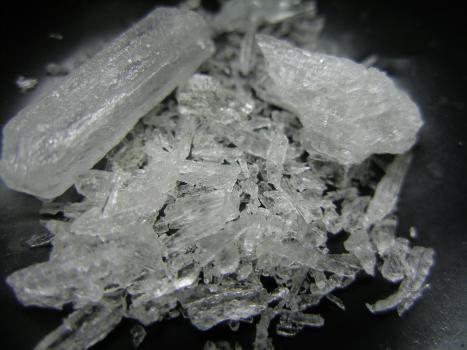
http://stopthedrugwar.org/files/methcrystals.jpg
methamphetamine crystals
Not so fast, said the authors of a new study released this week. In Drugs, Money, and Graphic Ads: A Critical Review of the Montana Meth Project, published this month in the journal Prevention Science, researchers found that the ad campaign produced a number of negative consequences and challenged its impact on meth use rates in the state.

According to the study, teens who had been exposed to six months of the project's graphic ads were three times as likely to say they did not believe meth use was a risky behavior and four times more likely to strongly approve of regular meth use. Half of the teens said the ads exaggerated the dangers of meth use.

The Montana Meth Campaign and its proponents overlooked such unflattering results when presenting findings to the media and policymakers, the researchers said. Instead, the campaign portrayed its results in the most positive light possible.

The researchers also scoffed at claims the program had reduced meth use. "Meth use had been declining for at least six years before the ad campaign commenced, which suggests that factors other than the graphic ads cause reductions in meth use. Another issue is that the launch of the ad campaign coincided with restrictions on the sale of cold and flu medicines commonly used in the production of meth. This means that drug use could be declining due to decreased production of meth, rather than being the result of the ad campaign," said review author David Erceg-Hurn in a Society for Prevention Research news release Thursday.

Ereceg-Hurn also attacked the theoretical underpinnings of the campaign. "The idea behind the ad campaign is that teenagers take meth because they believe it is socially acceptable, and not risky, and the ads are meant to alter these perceptions," he said. "However, this theory is flawed because the Meth Project's own data shows that 98% of teenagers strongly disapproved of meth use and 97% thought using meth was risky before the campaign started," Erceg-Hurn said.

Spending government funds on Meth Project-style campaigns is a waste of money, Erceg-Hurn concluded. Or, in more diplomatic terms: "Based on current evidence, continued public funding and rollout of Montana-style anti-methamphetamine graphic ad campaign programs is inadvisable."

Southeast Asia: Thai Government in New Drug Crackdown

The government of Thai Prime Minister Somchai Wongsawat announced a new anti-drug offensive last week aimed at a resurgent methamphetamine market and an enduring market in opium and heroin. Somchai said the new 90-day offensive could be seen as a continuation of the 2003 anti-drug campaign led by then Prime Minister Thaksin Shinawatra.

http://stopthedrugwar.org/files/thailandembassyprotest.jpg
2003 protest at Thai embassy, DRCNet's David Guard in foreground
A Thai government commission investigating Thaksin's war "to make Thailand drug-free" found that nearly 3,000 people were killed, many of them not involved in the drug trade. While no criminal convictions have been handed down, it is widely assumed that most of those killed were executed by police anti-drug death squads.

Somchai said his government would take measures to prevent more killings, but like his predecessor, tried to pin the killings on "slayings among suspected drug dealers," not the extrajudicial execution of drug dealers. That isn't exactly building confidence among Thai drug users and sellers or among the human rights community, which strongly criticized Thailand over the 2003 murder spree.

"The prime minister says that this time around killings will not be tolerated, but the government said the same thing last time," said Brad Adams, Asia director for Human Rights Watch, in a Wednesday news release warning that more abuses could lie ahead. "Somchai's credibility is at stake here."

After Thaksin was deposed last year, the government of General Surayud Chulanont appointed a special committee chaired by former Attorney General Khanit na Nakhon to investigate the extrajudicial killings that took place in 2003 as part of the "war on drugs." After five months of inquiries, the committee provided findings that 2,819 people had been killed between February-April 2003.

Many of those killed had been blacklisted by police or local authorities as suspected drug dealers. Police officers were suspected to have been involved in many of the attacks, particularly as many were killed soon after being summoned to police stations for questioning. For example, a 42-year-old grocery shop owner, Somjit Khayandee, was shot dead execution style in her house in Petchburi province on February 20, 2003, three days after she had been summoned to the police station. Local police told Somjit's relatives that her name was on their blacklist.

Police and other anti-drugs units in Thailand have sweeping powers and rarely face punishment for abuses and misconduct. The sense that officials will not be held accountable for their actions is so strong that abusive officials have sought promotion, fame, and financial rewards from the suffering of their victims.

"Many of the same people suspected of killings and other abuses in the last 'war on drugs' remain in positions of authority," Adams said. "The government should prosecute and discipline those involved in previous abuses and institute reforms before asking the police to mount another campaign. Otherwise, more people are likely to be killed."

While Thai authorities said they were going to concentrate on drug dealers, they also said drug users caught up in the net would participate in rehabilitation programs at military bases or be sent to prison. But given Thailand's poor record with respect to coerced drug treatment, that is not good news. Since 2003, thousands of people have been coerced into rehabilitation centers run by security forces without a clinical assessment that they are indeed drug dependent. Many have been held for extended periods of time -- usually 45 days -- in prison-based facilities, even if they are later referred to outpatient treatment. "Rehabilitation" is often provided by security personnel, with military drills a mainstay of the "treatment" provided.

Such coerced treatment has the effect of driving drug users away from seeking treatment or even government-sponsored health care services, Human Rights Watch said. With an estimated 40-50 percent of drug users in Thailand HIV-positive, this may keep drug users from accessing lifesaving HIV-prevention services and treatment.

"Forcing drug users into badly designed rehabilitation programs is incompatible with international standards requiring fully informed consent to treatment," Adams said. "Furthermore, fear of prosecution and harsh treatment will drive them away from seeking health care services that are theirs by right and that could actually help them."

Thailand's latest war on drugs is looking a lot like a war on drug users. That's a shocker.

2008 Global Conference On Methamphetamine - Presentations Now Available For Download

The 2008 Global Conference on Methamphetamine (held September 15 & 16, 2008 in Prague) was a collaboration of the Czech Republic, City of Prague, Centre for Addictology at Charles University, Network Environmental Systems, Podane Ruce, Cranstoun Drug, Harm Reduction Coalition, Association of Nurses in AIDS Care, & The Thorne Group. Presentations are now available for download at www.globalmethconference.com.
Location: 
Prague
Czech Republic

Drug War Follies: Iowa Anti-Meth Pseudoephedrine Law Snags Nasal Congestion Sufferer

As part of its effort to wipe out methamphetamine, and especially home-cooked meth, the state of Iowa enacted a law limiting the amount of pseudoephedrine people could purchase in a 24-hour period or in a month. The idea was to crack down on people who used the ingredient in popular cold and allergy medications to make their own meth.

http://stopthedrugwar.org/files/sudafed.gif
sinus sufferers beware -- of the cops!
But the law of unintended consequences struck again this month -- or in the case of loal sheriffs, perhaps intended consequences -- this time landing squarely on the head of a Mason City man who knows nothing about meth, but knows a lot about suffering from chronic nasal congestion. Gary Schinagel, 47, a senior investment associate at Principal Financial Group in Mason City, was arrested for the illegal purchase of pseudoephedrine after buying generic cold medicines to treat his condition.

Schinagel told the Mason City Globe Gazette his through-the-looking-glass encounter with the drug war began when his niece called him and told him he had been listed in a newspaper article as one of the uncaught miscreants in a roundup of violators of the cold medicine law. Schinagel went to the sheriff's office thinking he could clear up the "mistake," but was instead arrested.

"It is a sinking feeling to be placed under arrest," said Schinagel. "I'm not a stick-in-the-mud but I've tried all my life to abide by the law and not cross any lines I shouldn't cross. I've tried all my life to avoid situations like I find myself in now. And I still don't know which line I crossed," he said, wondering if he had purchased too many pills in one day or in one month.

He had to call his bank to get the $1,000 bail bond needed to get him out of jail. "It was embarrassing," he said. "The woman at the bank recognized my voice. I sang in the choir with her."

No word yet on apologies from the cops or when his charges will be dropped. In the meantime, Schinagel is taking cold pills that don't contain pseudoephedrine. They don't work as well, he said, and he has to buy more boxes. One more example of collateral damage in the drug war.

But Schinagel is more understanding than the police who arrested him after he came to the station to straighten out the mess. "Laws are made because there are some bad people out there and it's too bad that sometimes innocent victims get caught up in it," he said. "I understand the law -- but I will say there are some quirks in it."

Drug War Issues

Criminal JusticeAsset Forfeiture, Collateral Sanctions (College Aid, Drug Taxes, Housing, Welfare), Court Rulings, Drug Courts, Due Process, Felony Disenfranchisement, Incarceration, Policing (2011 Drug War Killings, 2012 Drug War Killings, 2013 Drug War Killings, Arrests, Eradication, Informants, Interdiction, Lowest Priority Policies, Police Corruption, Police Raids, Profiling, Search and Seizure, SWAT/Paramilitarization, Task Forces, Undercover Work), Probation or Parole, Prosecution, Reentry/Rehabilitation, Sentencing (Alternatives to Incarceration, Clemency and Pardon, Crack/Powder Cocaine Disparity, Death Penalty, Decriminalization, Drug Free Zones, Mandatory Minimums, Rockefeller Drug Laws, Sentencing Guidelines)CultureArt, Celebrities, Counter-Culture, Music, Poetry/Literature, Television, TheaterDrug UseParaphernalia, ViolenceIntersecting IssuesCollateral Sanctions (College Aid, Drug Taxes, Housing, Welfare), Violence, Border, Budgets/Taxes/Economics, Business, Civil Rights, Driving, Economics, Education (College Aid), Employment, Environment, Families, Free Speech, Gun Policy, Human Rights, Immigration, Militarization, Money Laundering, Pregnancy, Privacy (Search and Seizure, Drug Testing), Race, Religion, Science, Sports, Women's IssuesMarijuana PolicyGateway Theory, Hemp, Marijuana -- Personal Use, Marijuana Industry, Medical MarijuanaMedicineMedical Marijuana, Science of Drugs, Under-treatment of PainPublic HealthAddiction, Addiction Treatment (Science of Drugs), Drug Education, Drug Prevention, Drug-Related AIDS/HIV or Hepatitis C, Harm Reduction (Methadone & Other Opiate Maintenance, Needle Exchange, Overdose Prevention, Safe Injection Sites)Source and Transit CountriesAndean Drug War, Coca, Hashish, Mexican Drug War, Opium ProductionSpecific DrugsAlcohol, Ayahuasca, Cocaine (Crack Cocaine), Ecstasy, Heroin, Ibogaine, ketamine, Khat, Marijuana (Gateway Theory, Marijuana -- Personal Use, Medical Marijuana, Hashish), Methamphetamine, Nicotine, Prescription Opiates (Fentanyl, Oxycontin), Psychedelics (LSD, Mescaline, Peyote, Salvia Divinorum), Synthetic Drugs (Mephedrone, Synthetic Cannabinoids)YouthGrade School, Post-Secondary School, Raves, Secondary School